1. What Is the EPA 10 Square Foot Threshold?
The EPA 10 square foot threshold establishes the regulatory boundary between minor superficial cleaning and high-risk bio-hazard containment. Under official EPA guidelines published in Mold Remediation in Schools and Commercial Buildings, contamination exceeding 10 square feet (roughly 0.93 square meters) cannot be handled safely through consumer methods (such as wiping with household sprays or over-the-counter biocides).
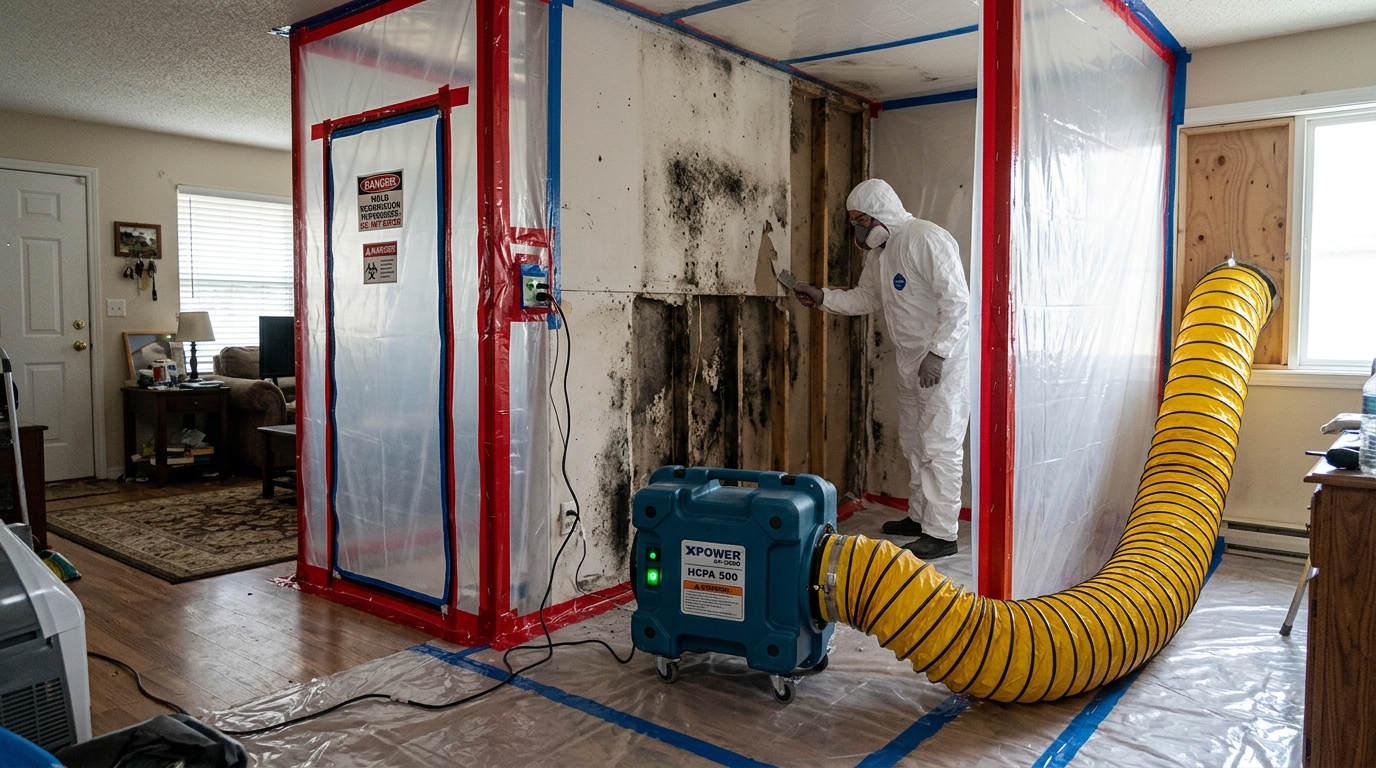
Fungal colonies of this magnitude have established extensive vegetative root networks (hyphae and mycelium) penetrating deep into porous building materials (such as drywall gypsum cores, oriented strand board subflooring, and structural timber framing). Physical agitation of an uncontained 10 square foot mold patch releases between 500 million and 2 billion microscopic spores directly into ambient air within seconds.
⚠️ The Physics of Spore Dispersal and Cross-Contamination
Microscopic mold spores measure between 1.5 and 30 microns in aerodynamic diameter, remaining suspended in stagnant indoor air for up to 72 hours. Standard central air conditioning blower units draw these suspended particulates into return air grilles, distributing viable fungal reproductive units into distant bedrooms, kitchens, and clean living areas unless certified technicians isolate the affected zone under continuous negative pressure.
2. Regulatory Framework: EPA, ANSI/IICRC S520 & OSHA 29 CFR 1910
Professional mold mitigation is governed by three primary regulatory and industry standards that dictate exact engineering controls:
| Governing Standard | Threshold Scope | Mandated Engineering Controls |
|---|---|---|
| EPA Guidelines (Level II / Small-to-Large) | 10 to 100 Sq. Ft. Contamination | Sealed polyethylene dust barriers, HEPA air vacuuming, negative air exhaust, and PPE. |
| ANSI/IICRC S520 (Condition 3 Protocol) | Active fungal colonization on building substrates | Critical 6-mil poly containment, continuous -5 Pascals manometer monitoring, and 6 Air Changes Per Hour (ACH). |
| OSHA 29 CFR 1910.134 & 1926.65 | Occupational respiratory protection | N100 or P100 half/full-face respirators, disposable Tyvek hazmat suits, and nitrile chemical gloves. |
3. Engineering Protocols for Level 2 Containment Chambers
Certified remediation contractors construct airtight isolation chambers to prevent airborne particulate escape during demolition. The physical containment structure requires four interconnected mechanical phases:
Phase A: 6-Mil Polyethylene Critical Barriers
Technicians seal doorways, windows, electrical wall receptacles, and HVAC supply registers using flame-retardant 6-mil polyethylene sheeting. All film seams are secured with commercial-grade polyethylene tape and tension-mounted spring poles to create a hermetic air seal.
Phase B: Double-Flap Air-Lock Decontamination Chambers
Entry points incorporate a two-stage zipping airlock transition vestibule. Technicians don disposable Tyvek suits and P100 respirators inside this intermediate transition chamber to prevent tracking spores onto clean flooring upon exiting.
Phase C: Negative Air Pressure Maintenance (-5 Pascals)
Industrial negative air machines (NAM) draw air continuously out of the containment zone, exhausting purified air outdoors via 10-inch flex ducting. Digital differential pressure manometers monitor the pressure differential continuously to maintain a minimum of -5 Pascals (-0.02 inches of water column), ensuring air flows inward only.
Phase D: HEPA 500 Continuous Air Scrubbing (6 ACH)
HEPA air scrubbers process the total cubic volume of the room at a minimum rate of 6 Air Changes Per Hour (ACH). Industrial multi-stage filtration captures 99.97% of airborne particulates down to 0.3 microns, including fungal spores, hyphal fragments, and cellular mycotoxins.
4. Controlled Demolition & Double-Bagging Disposal Protocols
Porous substrates (such as drywall gypsum board, cellulose insulation, and carpet padding) cannot be salvaged when active fungal growth exceeds 10 square feet. Removal must follow strict encapsulation procedures:
- Fungicidal Mist Stabilization: Technicians mist contaminated surfaces with botanical antimicrobials prior to cutting to suppress dust and spore aerosolization.
- Controlled 2-Foot Cut Margin: Drywall is cut and removed a minimum of 24 inches beyond the last visible sign of fungal colonization or moisture intrusion to capture unseen hyphal roots.
- Hermetic Double-Bagging: Demolished building materials are sealed immediately inside heavy 6-mil waste disposal bags inside the containment zone. Bags are vacuumed externally with HEPA equipment before transport through the clean living area.
- Abrasive Media Sanding & Blasting: Non-porous structural wood studs (pine and Douglas fir) are mechanically sanded or cryogenic dry ice blasted to bare wood before technicians apply EPA-registered fungicidal sealants.
5. Post-Remediation Verification (PRV) & Air Clearance Testing
Containment barriers remain fully erected until an independent AIHA-accredited environmental laboratory completes Post-Remediation Verification (PRV). Independent clearance testing confirms three clinical milestones:
- 1. Complete Visual Cleanliness: White-glove inspection confirms zero dust, debris, or fungal residue on structural framing and polyethylene sheeting.
- 2. Spore Count Parity: Total airborne spore concentrations inside containment must be lower than or equal to outdoor baseline control air samples.
- 3. Non-Detection of Toxic Indicator Fungi: Marker fungal species (such as Stachybotrys chartarum, Chaetomium, and Trichoderma) must show zero elevated presence on microscopic trace cassettes.
Schedule Certified EPA Level 2 Remediation Today
Our licensed network bills homeowners insurance adjusters directly using standard Xactimate® line-item schedules.
📞 TAP TO CALL 24/7 DISPATCH: (888) 320-1928