3 Structural Hazards: High-Humidity Crawlspace Saturation & Subfloor Rot in Port Washington
Subtropical relative humidity and damp soil conditions in Port Washington drive continuous moisture evaporation into unconditioned crawlspaces. Warm humid air condenses against cool air-conditioned subflooring, driving wood moisture equivalent above 19.0% and fostering toxic fungal colonies on structural joists within 48 hours.
The chimney stack effect pulls airborne fungal spores from damp Port Washington crawlspaces upward into living areas.
Unsealed dirt floors allow ground moisture to evaporate unchecked into subfloor timber assemblies.
Homes built with Full concrete block basements, Milwaukee historic cream city brick walk-ups, and lakefront cottages suffer accelerated floor joist rot when exposed to damp Red glacial till clay, sandy outwash drift, and prairie organic silt.
Certified technicians remove sagging wet fiberglass insulation, HEPA vacuum joists, and apply EPA-registered botanical antimicrobials.
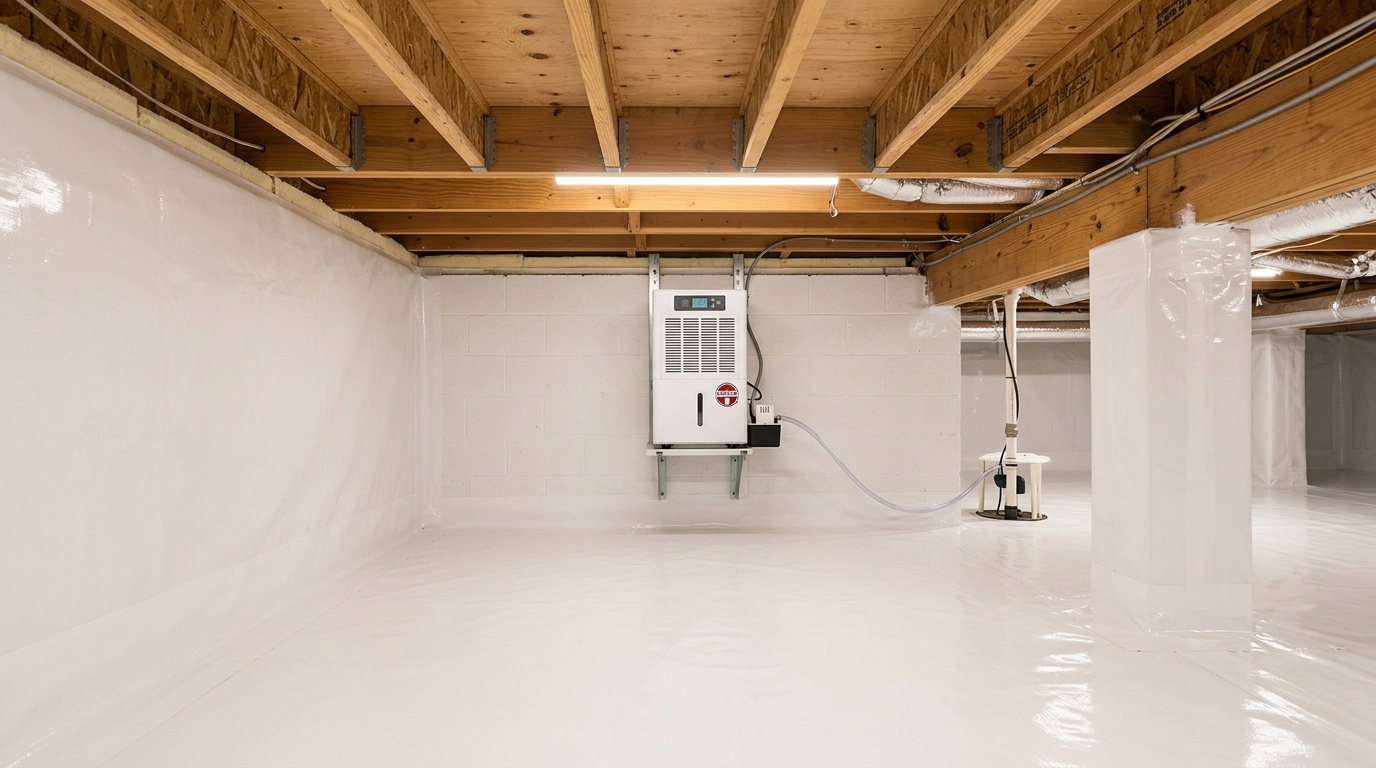
Crews install 20-mil continuous reinforced polyethylene vapor barriers and dedicated dehumidifiers to ensure compliance with Wisconsin Statutes Chapter 704 § 704.07 (Landlord Duty to Repair and Maintain Premises).
4 Standardized Inspection & Testing Protocols in Port Washington
Certified crawlspace decontamination and subfloor stabilization procedures deployed across Port Washington properties adhere strictly to ANSI/IICRC S520 standards. Technicians isolate contaminated subfloor cavities under negative pressure before applying antimicrobial encapsulants.
- Subfloor Wood Moisture Penetration Testing: Calibrated pin-type meters measure deep wood moisture across floor joists, girders, and subflooring.
- Cryogenic Dry Ice Blasting: Microscopic fungal hyphae are safely removed from contaminated wood joists without damaging structural integrity.
- 20-Mil Sealed Vapor Encapsulation: Heavy reinforced polyethylene barriers isolate earth moisture, wrapping piers and sealing perimeter foundation walls.
- Independent PRV Spore Trap Testing: Third-party laboratory air cassettes confirm airborne fungal counts meet clean indoor standards before closing files.
3 Regional Environmental Emergency Coverage Zones in Wisconsin
Our emergency response fleet coordinates 24/7 moisture extraction, negative-air containment, and ANSI/IICRC S520 remediation across all municipal sectors in Wisconsin. Certified technicians deploy within 15 to 30 minutes, maintaining synchronized radio dispatch between central operations and regional rapid response stations.
During severe plumbing line breaks or storm inundation, field crews coordinate certified Fort Atkinson mold testing protocols. Similarly, properties facing foundation moisture rely on our Two Rivers thermal moisture detection specialists.
Because airborne fungal spores spread across ventilation plenums, our inspectors partner with West Allis environmental hygienists to verify containment. We also execute timber decontamination backed by our Whitewater mitigation crews and Appleton inspectors.
Whether extracting Category 3 blackwater or sealing crawlspaces, our Bellevue remediation network provides immediate help. This protection is reinforced through our Deforest field stations and the Franklin emergency response team.
Frequently Asked Environmental Questions in Port Washington
Why do crawlspaces develop toxic fungal colonies in Port Washington, WI?
Crawlspaces in Port Washington develop fungal growth because open foundation vents draw warm, humid outdoor air beneath cool, air-conditioned floors. This temperature differential triggers heavy condensation on floor joists, creating ideal moisture levels for black mold germination.
Sealing foundation vents and installing commercial dehumidification maintains relative humidity below 55%, preventing ongoing fungal recurrence permanently.
How do technicians lower wood moisture in damp Port Washington crawlspaces?
Certified technicians lower crawlspace wood moisture by deploying commercial low-grain refrigerant dehumidifiers and sealed 20-mil vapor encapsulation barriers. Continuous drying reduces timber Wood Moisture Equivalent from over 25.0% to safe baselines below 14.0% within days.
Digital hygrometers and remote psychrometric sensors verify that wood joists remain completely stabilized before finishing the encapsulation process.
Can crawlspace moisture issues cause mortgage loan denials in Wisconsin?
Yes, mortgage underwriters frequently suspend FHA, VA, and conventional loans in Wisconsin when appraiser reports identify crawlspace wood decay or active mold. Lenders require certified remediation and an AIHA-accredited Post-Remediation Verification clearance report before funding.
We provide priority 24-hour turnaround on PRV clearance documentation under Wisconsin Statutes Chapter 704 § 704.07 (Landlord Duty to Repair and Maintain Premises) to protect real estate closing escrow timelines.
We dispatch certified environmental specialists across all Wisconsin counties. View our Main Wisconsin State Directory Hub or return to the 50-State Hub Directory.
Read our certified Crawl space fungal remediation and mortgage loan clearance guide.
Explore the solved High humidity crawlspace timber fungus and repair escrow clearance case study.