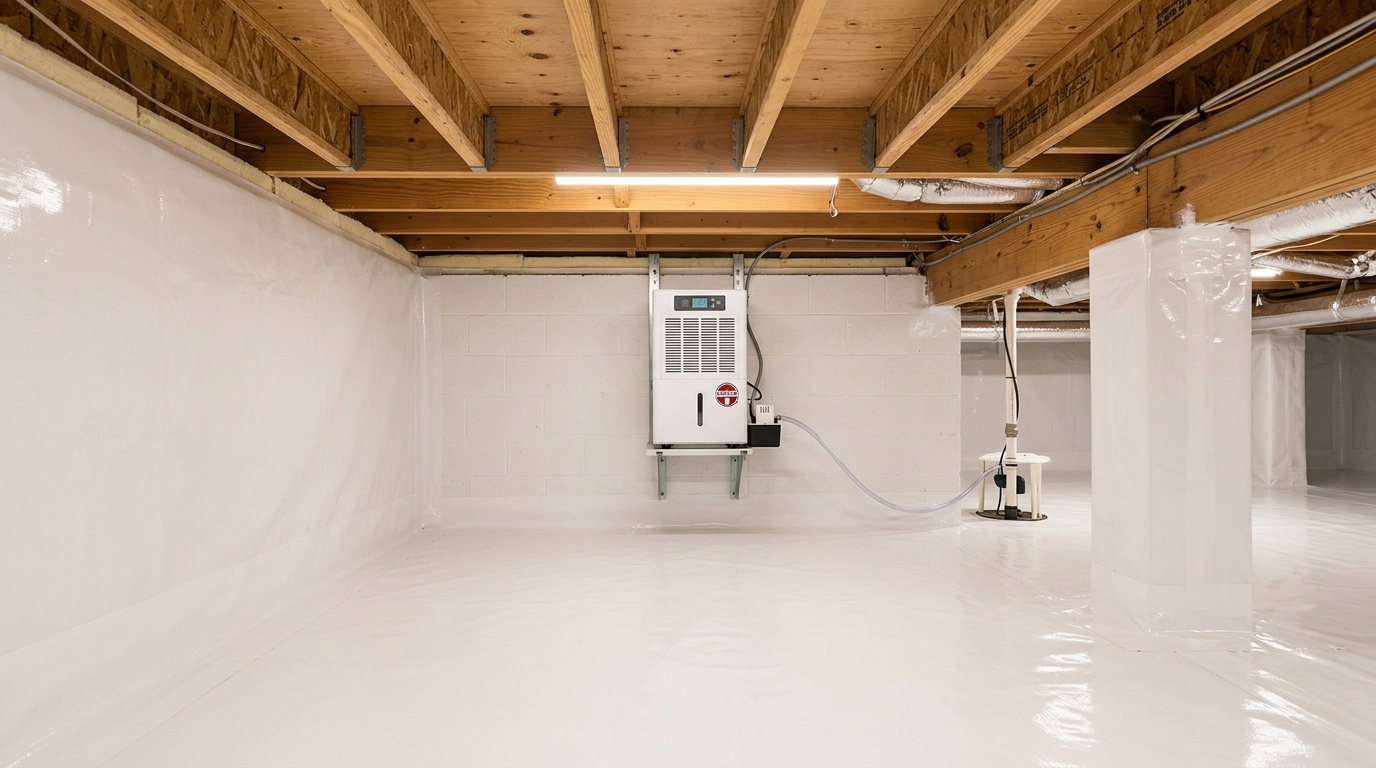
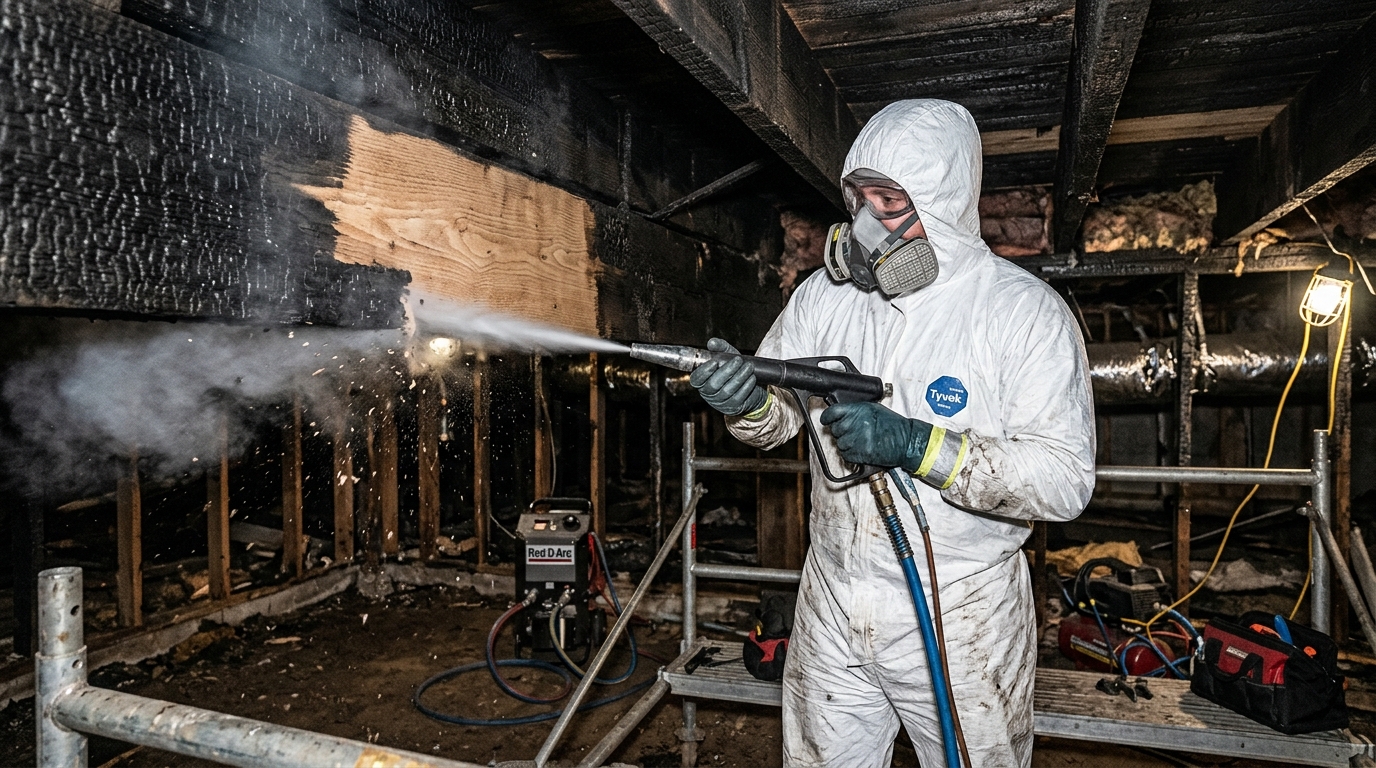
Indoor mold constitutes an active biological health hazard and structural threat to residential properties. Certified remediation technicians establish negative air containment, perform FLIR thermal moisture mapping, and execute direct insurance billing within 15 to 30 minutes of initial dispatch.
Local IICRC-certified crews dispatch directly to residential properties
Professional remediation is required immediately when building materials sustain water damage, fungal surface growth exceeds 10 square feet, or residents experience respiratory symptoms.
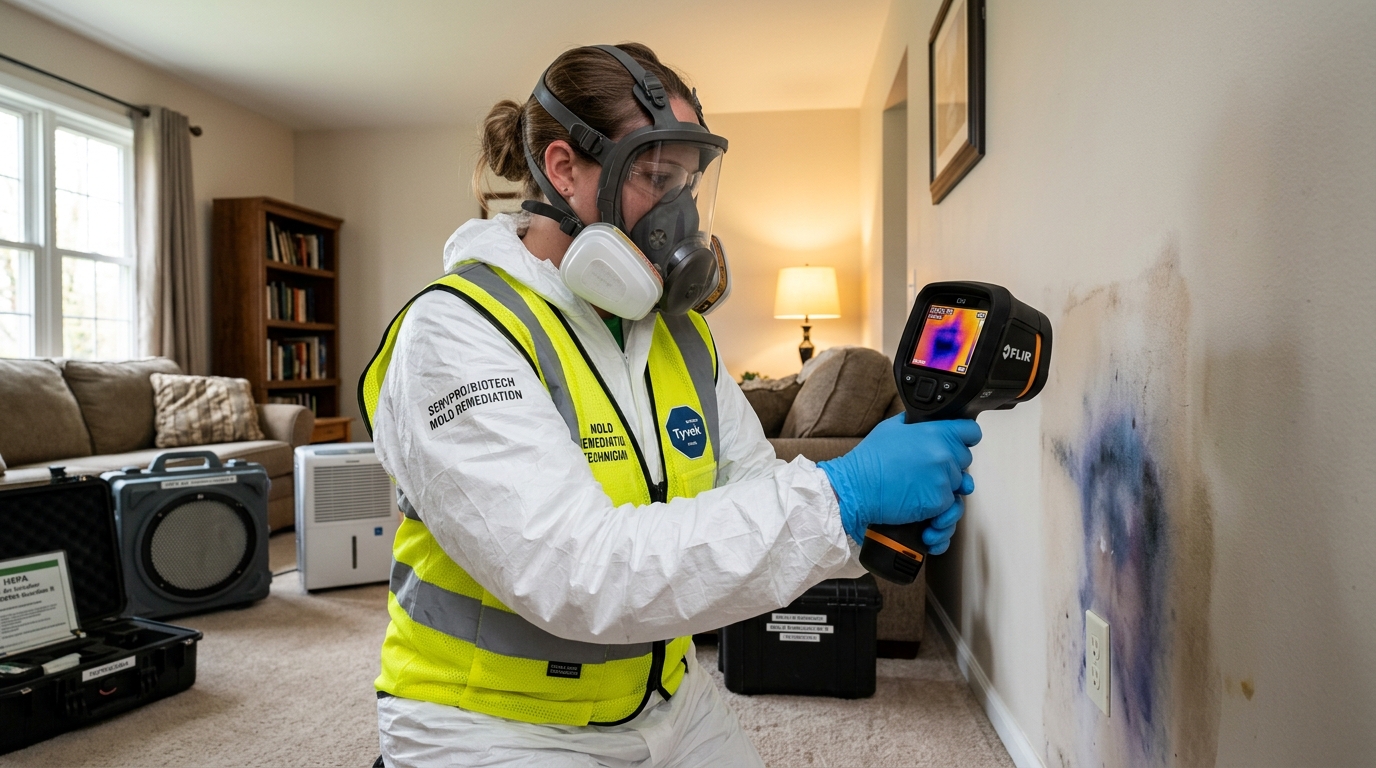
Fungal spores germinate within 24 to 48 hours when standing moisture contacts cellulose building materials (such as drywall gypsum paper, wood studs, and subfloor joists). Microscopic hyphae colonize interior wall cavities and air distribution ducts rapidly unless technicians extract moisture with commercial desiccant dehumidifiers.
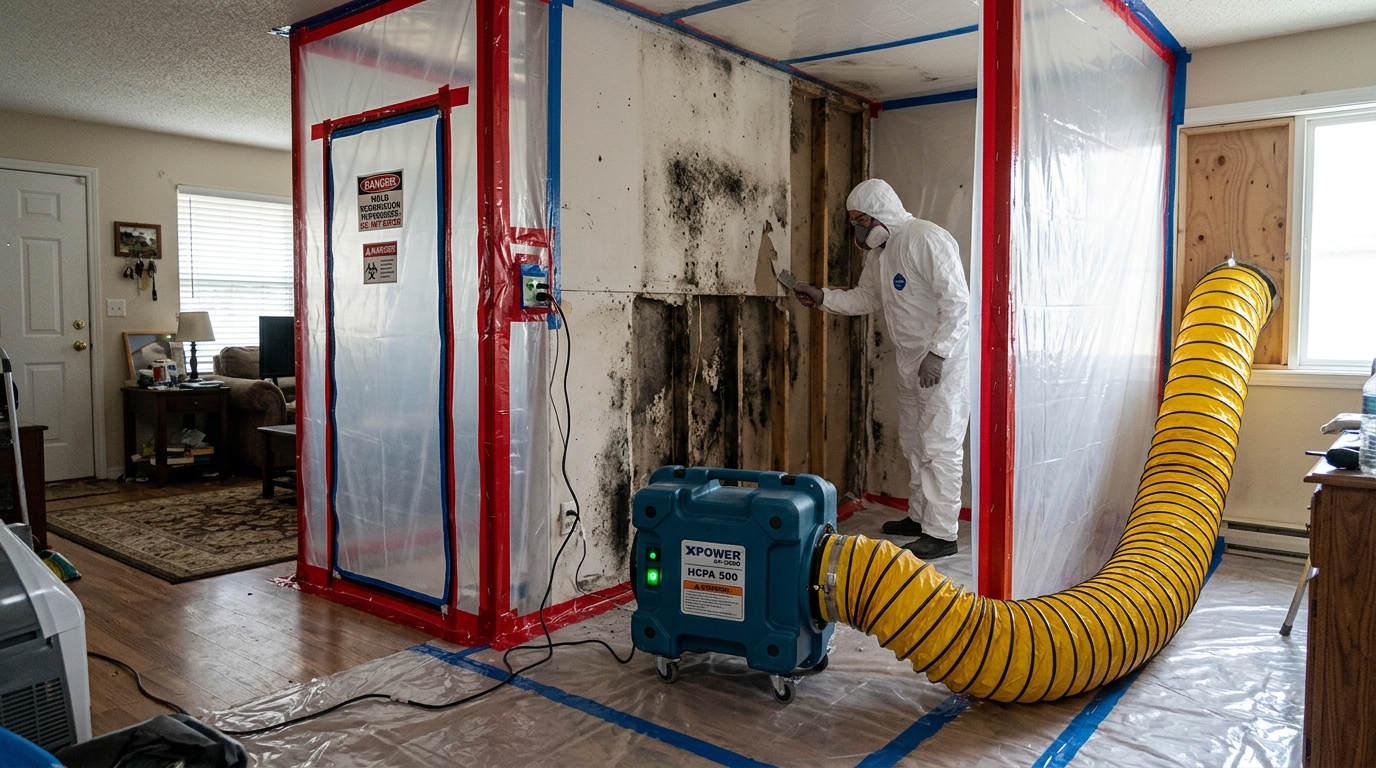
Professional containment is mandatory under EPA guidelines whenever visible mold covers an area greater than 10 square feet (such as a 3-foot by 3-foot section). Manual consumer cleaning aerosolizes billions of toxic spores throughout the home unless technicians maintain negative air pressure at -5 Pascals with sealed 6-mil polyethylene barriers.
Airborne fungal mycotoxins induce severe clinical reactions in vulnerable populations (such as individuals with asthma, allergic rhinitis, infants, elderly residents, and immunocompromised patients). Fungal particulates trigger bronchospasms, chronic sinusitis, and cognitive lethargy whenever mycotoxin concentrations escalate indoors.
Indoor fungal contamination involves specific pathogenic fungal species that produce toxic secondary metabolites:
Stachybotrys chartarum is a toxigenic fungal species that colonizes high-cellulose building materials (such as wet drywall and subfloor panels). This fungus produces macrocyclic trichothecene mycotoxins (such as satratoxin-H and verrucarin J) that induce pulmonary inflammation.
Aspergillus and Penicillium are micro-spore fungal genera that proliferate inside HVAC ducts and damp carpets. These airborne spores cause allergic bronchopulmonary aspergillosis (ABPA) and chronic rhinosinusitis in sensitive individuals.
Chaetomium and Alternaria are water-marker fungal species that proliferate after chronic roof and foundation leaks. Alternaria serves as a primary allergen triggering severe pediatric asthma attacks during elevated spore concentration events.
Indoor mycotoxins induce multi-system clinical damage across human organ systems, cognitive neurological pathways, vulnerable age demographics, pre-existing chronic diseases, and domestic animals.
Physical tissue damage occurs when fungal proteases degrade epithelial tight junctions. Inhaled mycotoxins induce acute alveolar capillary bleeding (pulmonary hemosiderosis), chronic hyperplastic sinus polyps, treatment-resistant eczema, and systemic mast cell activation syndrome (MCAS).
Cognitive decline ("Brain Fog") results when lipophilic mycotoxins cross the blood-brain barrier to trigger frontal lobe microglial inflammation. Particulates induce toxic encephalopathy, working memory deficits, unprovoked panic attacks, clinical depression, and severe REM sleep fragmentation.
Vulnerability varies by physiological development profile. Infants sustain high risks of idiopathic pulmonary hemorrhage; pregnant mothers experience elevated placental oxidative stress; seniors with reduced pulmonary reserves suffer accelerated COPD progression and pneumonia.
Fungal antigens act as acute disease accelerants. Particulates convert mild asthma into emergency status asthmaticus; trigger Chronic Inflammatory Response Syndrome (CIRS) in autoimmune patients (such as Lupus and Hashimoto's); and induce fatal Invasive Aspergillosis in immunocompromised individuals.
Domestic animals experience concentrated exposure by residing within 12 inches of floor surfaces where fungal spores settle. Canines develop severe atopic paw chewing and nasal bleeding (epistaxis); felines suffer acute feline asthma; pet birds experience fatal air-sac collapse within 48 hours.
Airflow filtration calculations determine the required industrial HEPA cubic-feet-per-minute (CFM) extraction rate under ANSI/IICRC S520 standards (maintaining 6 Air Changes Per Hour / ACH). Input your room parameters below:
Calculates Total Room Volume, Required HEPA 500 Scrubbing CFM, and Official EPA Containment Level
Evaluate your property parameters to determine the required EPA containment level and emergency technician dispatch schedule:
Confidential Evaluation • Real-Time Dispatch Routing • 100% Free On-Site Inspection
Required Mitigation & Containment Level:
✓ Eligible for 100% Direct Homeowners Insurance Claim Billing
Connect with an on-duty IICRC specialist to dispatch a crew to your property:
📞 TAP TO CALL: (888) 320-1928Certified crews apply specialized technologies to eradicate mold colonies across distinct structural micro-environments:
HVAC duct remediation removes settled fungal spores using 5,000 CFM negative-pressure extraction units. Technicians sterilize air distribution coils, clear condensate drain lines, and apply EPA-registered botanical antimicrobials throughout duct trunks.
Bioaerosol testing measures airborne fungal spore concentrations using calibrated Air-O-Cell cassettes drawing 15 liters per minute. AIHA-accredited laboratories analyze indoor counts against outdoor baseline controls to establish Post-Remediation Verification (PRV).
Certified restoration technicians execute standard ANSI/IICRC S520 procedures to restore indoor environments to Condition 1 normal fungal ecology:
Infrared thermal imaging cameras and penetrating moisture meters pinpoint hidden moisture reservoirs behind drywall assemblies and subflooring.
Polyethylene 6-mil plastic barriers and negative air machines maintain -5 Pascals of differential pressure to prevent cross-contamination.
Industrial HEPA 500 air scrubbers extract 99.97% of airborne spores and toxic mycotoxins down to 0.3 microns during remediation.
Technicians bag contaminated porous substrates for disposal, treat structural timber with EPA-registered fungicides, and apply antimicrobial coatings.
Independent spore trap air testing verifies Condition 1 normal fungal ecology before technicians dismantle containment barriers.
Homeowners insurance policies (such as standard HO-3 and HO-5 forms) cover mold remediation whenever fungal colonization results from sudden and accidental water discharges (such as indoor plumbing pipe bursts, water heater failures, and appliance supply line leaks).
Scientific reference guides on EPA containment rules, medical hazards, fungal taxonomy, and structural restoration:
EPA protocols mandate certified negative-air containment whenever visible mold exceeds 10 square feet.
Read Guide →Airborne mycotoxins induce severe bronchospasms in asthmatic and immunocompromised occupants.
Read Guide →Biological taxonomy of Stachybotrys, Aspergillus, Penicillium, and Chaetomium mycotoxins.
Read Guide →IICRC guidelines define Condition 1, 2, and 3 fungal ecology states and critical containment protocols.
Read Guide →Fungal hyphae colonize wet building assemblies within 24 to 48 hours following water leaks.
Read Guide →The Stack Effect pulls subfloor fungal spores upward into ground-floor living areas.
Read Guide →Technicians extract duct spores using 5,000 CFM negative pressure vacuums and botanical misting.
Read Guide →Cryogenic CO2 pellets sublimating at -109°F strip deeply embedded fungal roots from wood framing.
Read Guide →Calibrated Air-O-Cell cassettes establish Post-Remediation Verification (PRV) against baseline air.
Read Guide →Itemized Xactimate® line-item documentation accelerates adjuster approvals for covered water perils.
Read Guide →Clinical analysis of brain fog, infant/senior risks, CIRS disease interactions, and pet toxicity.
Read Comprehensive Guide →Certified technician networks operate across all 50 US states to deliver 15-to-30 minute emergency dispatch:
Technical answers based on EPA guidelines and ANSI/IICRC S520 remediation standards: