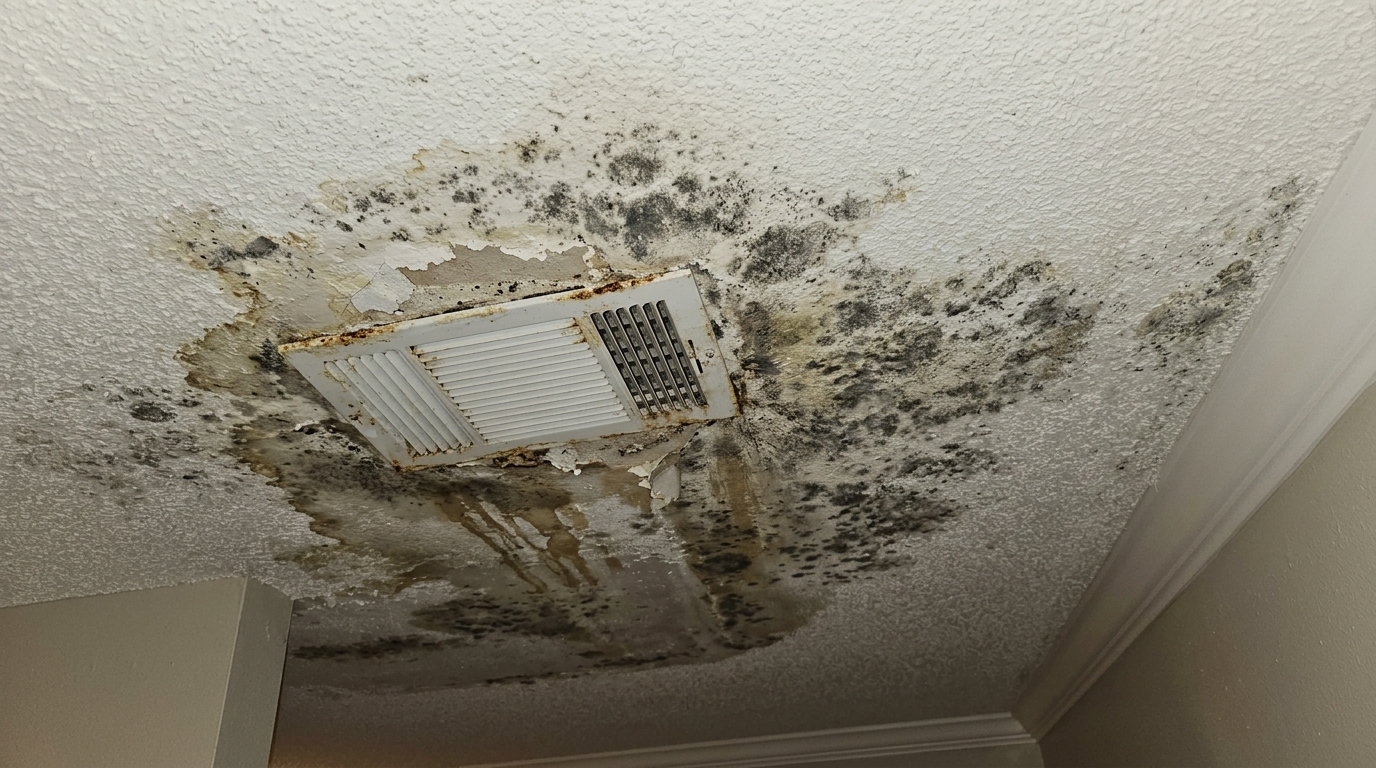
Microbiology of the 3/4-Inch Drain Line Clog: Zoogleal Biofilm Formation
The condensate drain line of a modern split-system air conditioner is an ideal biological incubator. As chilled indoor air passes over aluminum evaporator coils cooled to 42°F to 48°F, atmospheric moisture condenses on the metal fins, washing airborne contaminants into the plastic condensate pan:
- Zoogleal Microbial Colonization: Water flowing through the drain line contains dust, organic skin cells, pollen, and fungal spores. Bacteria (such as Zoogloea ramigera) secrete extracellular polymeric substances (EPS), creating a slimy, tenacious biofilm that adheres to internal PVC pipe walls.
- Progressive Lumen Constriction: Over 60 to 90 days of sustained summer cooling, the gelatinous slime layer thickens, trapping airborne debris and dust. Eventually, the effective internal diameter of the 3/4-inch line narrows to zero.
- Backpressure & Overflow: Once the drain pipe occludes, condensate pools in the internal coil drain pan. Within 4 to 8 hours of continuous compressor runtime, 5 to 10 gallons of water overflow into the secondary metal drain pan or directly onto the attic subfloor.
Float Switch Failure: Why Safety Shutoffs Frequently Don't Stop the Flood
Modern building codes (such as IRC Section M1411.3.1) mandate installing auxiliary drain pans with secondary drain lines or electronic water-level float safety switches (P-trap float switches) designed to shut off the thermostat when water rises. However, hundreds of ceiling floods occur weekly despite these safety mechanisms:
- Float Switch Float Jamming: Algae slime coats the magnetic reed switch float inside the condensate switch, physically gluing the plastic float in the 'down' position even when submerged under water.
- Un-Level Secondary Pan Installation: In older or poorly pitched attics, water pools at the opposite end of the secondary drain pan away from the sensor switch, spilling over the metal lip long before water touches the float switch.
- Bypassed Safety Wiring: HVAC technicians during previous service calls occasionally bypass the low-voltage yellow wire switch connection to clear false alarms, leaving the air conditioner running uninterrupted while water pours into ceiling cavities.
The 48-Hour Fungal Incubator: Attic Heat Meets Chilled Ceiling Drywall
AC condensate leaks are uniquely hazardous because of the extreme thermodynamic gradient between the unconditioned attic and the air-conditioned bedroom below:
- Extreme Thermal Gradient: An unconditioned attic in summer reaches 115°F to 135°F, while the drywall ceiling below is kept at 68°F to 74°F by the HVAC registers.
- Accelerated Fungal Kinetics: Microscopic mold spores thrive in warm, dark, stagnant environments with moisture availability exceeding 70% equilibrium relative humidity. When warm condensate saturates the organic cellulose paper backing of ceiling sheetrock, fungal spore germination occurs in under 24 to 36 hours.
- Musty Odor Distribution: Because the leak originates at the air handler plenum, the negative pressure of the HVAC return duct pulls billions of aerosolized mold spores into the air distribution system, dispersing mycotoxins across the entire home.
Certified Remediation Protocol: Negative Air Containment & Drywall Flood Cuts
Homeowners who merely spray bleach on a water-stained ceiling leave active fungal hyphae growing within the structural framing. Certified ANSI/IICRC S520 remediation requires:
- Negative-Air Containment Setup: Technicians isolate the affected bedroom with plastic zip-walls and operate HEPA-filtered air scrubbers at -5 Pascals to prevent spore cross-contamination.
- Precision 24-Inch Ceiling Cutouts: All water-stained, sagging, or mold-colonized drywall is excised 12 to 24 inches beyond the furthest moisture boundary identified by FLIR thermal cameras.
- Coil & Line Decontamination: The primary PVC line is mechanically cleared with nitrogen gas pressure and treated with EPA-registered quaternary biocidal pan tablets, while the secondary pan is sanitized and re-pitched.
- Structural Joist Antimicrobial Sealing: Framing joists and ceiling timber are hand-scrubbed with botanical biocides and dried below 13.0% WME before new drywall is hung and finished.
Insurance Claim Navigation: Sudden Water Intrusion vs Maintenance Exclusions
Filing an insurance claim for an AC condensate leak requires careful forensic documentation. Insurance adjusters often attempt to deny condensate claims under policy clauses excluding 'gradual wear and tear, rust, or ongoing seepage.'
However, when an auxiliary float switch fails and causes a sudden pan overflow, the incident constitutes a covered sudden and accidental discharge. IICRC restoration contractors support your claim by providing complete forensic packages in Xactimate®:
WTR DRY- Controlled selective demolition and disposal of water-damaged ceiling drywall under containment.WTR DEHUM- Commercial LGR dehumidifiers and HEPA air filtration equipment runtime logs.WTR BIO- Broad-spectrum EPA-registered antimicrobial treatment of ceiling framing cavities.LAB PRV- Independent third-party Post-Remediation Verification clearance testing certifying zero airborne spore elevation.