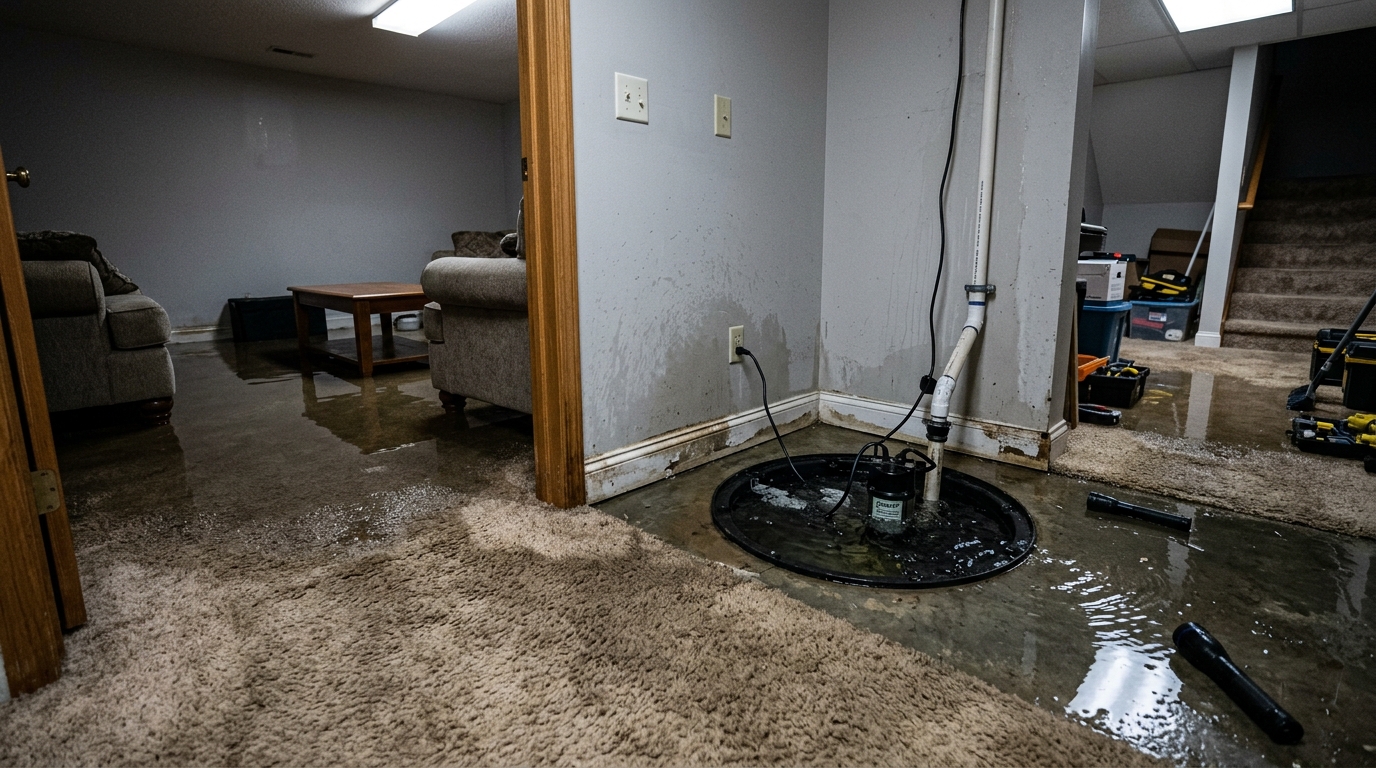
Hydrostatic Groundwater Dynamics & Sump Basin Overload Mechanics
Subterranean residential basements act as displacement vessels sitting directly inside saturated soil horizons. During heavy rainstorms or rapid spring snowpack melting, several hydrostatic mechanisms overwhelm mechanical drainage systems:
- Perched Water Table Surges: Saturated soil creates lateral and upward hydrostatic pressure exceeding 600 pounds per square foot (psf) against concrete foundation footings. Perforated perimeter footing drains channel hundreds of gallons per hour into the internal sump crock.
- Mechanical Float Switch Seizure: Vertical or tethered mechanical float switches operate via internal mercury contacts or mechanical micro-switches. Over years of cycling in mineral-heavy groundwater, iron ochre and calcium deposits crust the float rod, jamming the switch in the 'off' position.
- Primary Motor Burnout & Power Failure: Standard 1/3 HP or 1/2 HP shaded-pole motors overheat when forced to run continuously against high dynamic discharge head pressure. In addition, severe storms frequently knock out residential utility power, instantly disabling AC-powered pumps unless protected by dedicated dual-battery backup systems.
Insurance Policy Fine Print: Standard Exclusions vs HO-0495 Water Backup Rider
Navigating insurance claims for a flooded basement requires understanding the precise legal distinction between excluded surface floodwater and covered drain backup:
- The Standard Water Exclusion Clause: Unendorsed standard ISO Form HO-3 policies contain explicit exclusionary language: 'We do not insure for loss caused directly or indirectly by water damage, meaning water which backs up through sewers or drains or which overflows from a sump pump.' Homeowners without special riders receive zero reimbursement.
- The HO-0495 Endorsement: Policyholders who specifically add the Water Backup and Sump Discharge or Overflow Endorsement (Form HO-0495) receive dedicated coverage for direct physical loss resulting from water originating from inside the plumbing, drain, or sump pit.
- Coverage Sub-Limits: Crucially, water backup endorsements carry strict sub-limits - typically ranging from $5,000 to $25,000 - regardless of whether your main dwelling coverage is $500,000. Because commercial water extraction, drywall cutting, and reconstruction easily exceed $15,000, homeowners must avoid predatory contractors and utilize certified IICRC firms that bill standardized Xactimate rates to maximize the rider limit.
Biological Category of Sump Overflow: Gray Water vs Blackwater Hazards
Groundwater entering through an overwhelmed sump pump is classified under ANSI/IICRC S500 as Category 2 (Gray Water) and rapidly degrades into Category 3 (Blackwater):
- Microbial Inoculation: Groundwater passes through sub-surface topsoil, collecting soil bacteria, organic humus, agricultural chemical runoff, and fungal spores.
- Carpet Padding Sponge Effect: Bonded polyurethane carpet padding cannot be salvaged after Category 2 groundwater submergence. The foam absorbs hundreds of gallons, holding dirty water against the concrete slab and driving relative humidity to 100%.
- Wall Cavity Wicking: Drywall gypsum paper wicks water vertically 12 to 24 inches above standing water levels, initiating aggressive Chaetomium and Aspergillus colony formation inside stud bays in under 48 hours.
Certified 5-Step Basement Flood Remediation Protocol
Certified IICRC restoration specialists execute an aggressive 5-step extraction and structural drying timeline:
- Step 1: Submersible Emergency Extraction: Heavy-duty electric submersible pumps and truck-mounted high-cfm extractors remove bulk standing water down to slab level within the first 60 minutes.
- Step 2: Sub-Surface Carpet Extraction & Pad Removal: Technicians run weighted water-claw extractors across carpet surfaces, pull back carpet to slice out waterlogged padding for disposal, and treat carpet backing with broad-spectrum antimicrobials.
- Step 3: Surgical 24-Inch Drywall Flood Cuts: Technicians cut drywall horizontally 12 to 24 inches above the moisture line with oscillating saws, removing wet insulation and opening stud cavities to direct airflow.
- Step 4: High-Heat Commercial LGR Dehumidification: Low Grain Refrigerant (LGR) dehumidifiers pull chamber air below 35 grains per pound (GPP), forcing moisture out of concrete slabs and timber bottom plates.
- Step 5: ASTM F2170 Concrete Moisture Profiling: Pin probes and in-situ relative humidity sensors measure slab moisture equilibrium until concrete dries below acceptable thresholds before flooring replacement.
Xactimate® Direct Insurance Billing for Sump Claims
Because water backup endorsements carry strict dollar limits, contractors must structure the invoice using exact Xactimate line items to ensure every dollar of coverage goes toward critical structural drying and sanitization: WTR EXTW - Industrial extraction of standing groundwater from concrete slabs.
Because water backup endorsements carry strict dollar limits, contractors must structure the invoice using exact Xactimate line items to ensure every dollar of coverage goes toward critical structural drying and sanitization:
WTR EXTW- Industrial extraction of standing groundwater from concrete slabs.FCC PADR- Tear-out and bagging of water-damaged carpet padding under containment.WTR DRY- Controlled horizontal flood cuts on basement perimeter sheetrock.WTR DEHUM- Commercial LGR dehumidifier daily runtime logs verifying psychrometric progress.WTR BIO- Botanical broad-spectrum EPA-registered antimicrobial application on exposed masonry and timber framing.