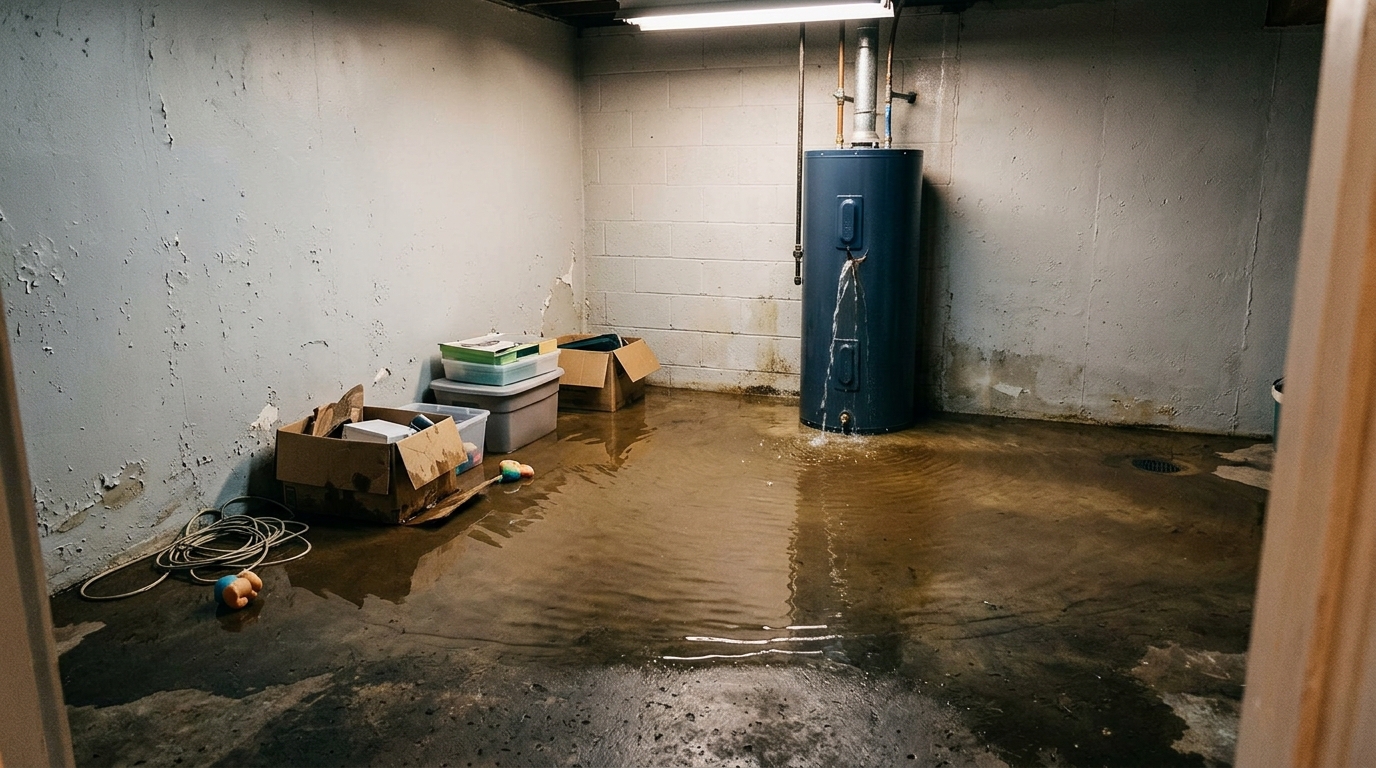
Anatomy of a Tank Rupture: Anode Depletion & Galvanic Tank Corrosion
Water heaters endure severe thermodynamic stress throughout their 8 to 12-year lifespan. Glass-lined steel tanks rely on a sacrificial magnesium or aluminum anode rod to attract corrosive minerals and stray electrical currents through galvanic electrolysis. Over time, several irreversible failure mechanisms culminate in sudden tank failure:
- Anode Consumption & Pinhole Seam Rust: Once the sacrificial anode rod dissolves entirely, corrosive hot water attacks microscopic cracks in the porcelain glass lining, eating directly into raw steel tank welds.
- Thermal Cycling Expansion: Daily heating cycles cause metal fatigue along bottom dome welds and cold-water inlet dip tubes.
- Sudden Bottom Seam Blowout: Unlike gradual valve drips, galvanic weld corrosion triggers violent bottom seam separation. Fifty to eighty gallons of pressurized boiling water dump across the floor pan within seconds, overwhelming standard 1-inch PVC drain pans.
The Attic Catastrophe: Water Weight, Wet Insulation & Ceiling Collapse Physics
When a water heater fails in an attic space, the hazard escalates from a plumbing leak to an immediate structural collapse emergency:
- Weight Multiplication: Standard 1/2-inch ceiling drywall is rated to support approximately 1.5 to 2.2 pounds per square foot. When 50 gallons of water (weighing over 415 lbs) discharge into blown-in fiberglass or loose-fill cellulose insulation, the insulation holds water like a sponge. Saturated insulation weight skyrockets to over 25 to 35 pounds per square foot.
- Fastener Pull-Through: Gypsum drywall cores soften instantly under moisture immersion. Drywall screws pull straight through the mushy gypsum core, causing entire 8x12-foot ceiling sections to collapse under dynamic load.
- Electrical & HVAC Contamination: Water runs into recessed ceiling lighting cans, ceiling fans, and flexible HVAC duct jackets, creating severe electrical short-circuit and fire hazards.
Why Saturated Blown-In Insulation Cannot Be Dried in Place
A dangerous mistake made by inexperienced property owners is attempting to dry wet attic insulation using fans. Saturated blown-in cellulose and fiberglass cannot be salvaged under ANSI/IICRC S500 standards for three critical reasons:
- Capillary Moisture Trapping: Compacted wet cellulose maintains relative humidity above 90% directly against structural ceiling joists for weeks, rotting timber and cultivating toxic Stachybotrys colonies out of sight.
- Chemical Binder Leaching: Saturated fiberglass batts lose their loft and R-value permanently, while fire-retardant borate salts wash out of wet cellulose, creating corrosive slurry that attacks electrical wiring and drywall screws.
- Industrial Vacuum Extraction Protocol: Certified crews position high-powered 23-horsepower truck-mounted gas vacuum extractors outside the home, running 6-inch corrugated hoses into the attic to suck saturated insulation directly into heavy-duty disposal bags outside the living envelope under negative pressure.
Surgical Ceiling Drywall Flood Cuts & Framing Joist Decontamination
Once wet insulation is extracted, certified technicians address damaged ceiling drywall and timber framing:
- Controlled Containment & 48-Inch Flood Cuts: Technicians isolate damaged rooms with zip-wall polyethylene containment barriers under negative air pressure. Sagging drywall is cut back exactly 12 to 24 inches beyond the furthest moisture boundary, exposing joist bays.
- EPA Botanical Biocide Fogging: Raw attic ceiling joists and top plates are treated with hospital-grade botanical antimicrobials to neutralize dormant fungal spores before drying begins.
- Industrial Desiccant & LGR Dehumidification: High-capacity LGR dehumidifiers and high-velocity axial fans circulate dry air across joists until wood moisture drops below 13.0% WME.
Xactimate® Line Items & Insurance Coverage Optimization
Water heater ruptures are standard covered perils under comprehensive homeowners insurance policies (HO-3/HO-5) under the "Sudden and Accidental Discharge" clause. However, while insurers pay for resulting water damage, they frequently refuse to pay for the replacement water heater unit itself.
Our restoration teams eliminate billing friction by itemizing water damage claims using standardized Xactimate® software lines:
INS VAC- Machine-vacuum extraction of saturated blown-in ceiling insulation.WTR EXTW- Water extraction from hard surfaces, concrete, and subflooring.DRY DEMO- Precision demolition of collapsed and contaminated drywall ceiling assemblies.WTR DEHUM- Continuous operation of commercial LGR dehumidifiers and negative-air scrubbers.WTR BIO- Application of broad-spectrum EPA-registered antimicrobial agents on framing lumber.