3 Structural Hazards: Winter Roof Ice Dams & Attic Condensation in Happy Valley
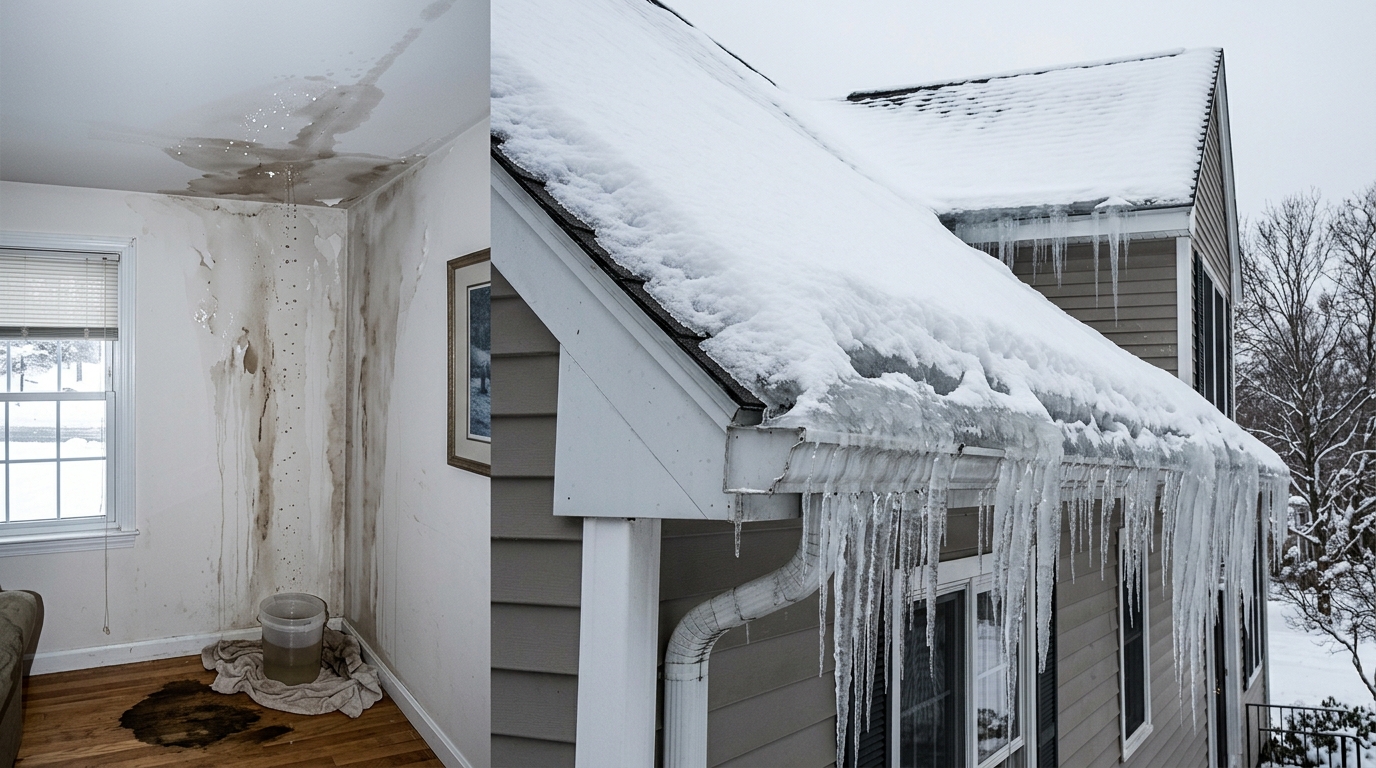
Inadequate attic ventilation and interior heat leakage across Happy Valley homes melt roof snowpack, forming heavy ice dams along unheated eaves. Trapped meltwater backs up beneath asphalt shingles, dripping onto attic insulation and promoting toxic fungal colonies across roof sheathing timbers.
Warm indoor air leaking past recessed lighting and attic hatches melts heavy snowpack in Happy Valley.
Trapped meltwater refreezes at cold roof edges, pooling water that penetrates structural sheathing.
Residences built with Craftsman timber crawlspaces, cedar shingle siding homes, and contemporary engineered wood envelopes face roof deck moisture challenges when winter winds chill Volcanic Columbia river basalt clay, Willamette Valley silty loam, and coastal sand.
Technicians remove compressed wet insulation, air-seal thermal bypasses, and blast fungal growth from roof rafters.
High-efficiency dehumidification stabilizes attic moisture levels, ensuring complete compliance with Oregon Revised Statutes Chapter 90 (Residential Landlord and Tenant Act ORS § 90.320).
4 Standardized Inspection & Testing Protocols in Happy Valley
Attic frost melt remediation and ice dam moisture containment across Happy Valley follow strict ANSI/IICRC S520 engineering standards. Specialists restore attic ventilation baffles and decontaminate contaminated roof framing timbers safely.
- Attic Rafter Moisture Inspection: Deep pin probes measure moisture gradients across roof sheathing, trusses, and structural rafters.
- Thermal Bypass Air Sealing: Technicians seal plumbing chase gaps, recessed light fixtures, and attic hatch perimeters with fire-rated expanding foam.
- Cryogenic Dry Ice Joist Blasting: Frozen CO2 pellets eliminate surface fungal colonies from roof sheathing without chemical residue.
- Ventilation Baffle Optimization: Proper installation of rafter vent baffles ensures unobstructed continuous airflow from soffit vents to roof ridges.
3 Regional Environmental Emergency Coverage Zones in Oregon
Our emergency response fleet coordinates 24/7 moisture extraction, negative-air containment, and ANSI/IICRC S520 remediation across all municipal sectors in Oregon. Certified technicians deploy within 15 to 30 minutes, maintaining synchronized radio dispatch between central operations and regional rapid response stations.
During severe plumbing line breaks or storm inundation, field crews coordinate certified The Dalles mold testing protocols. Similarly, properties facing foundation moisture rely on our White City thermal moisture detection specialists.
Because airborne fungal spores spread across ventilation plenums, our inspectors partner with Altamont environmental hygienists to verify containment. We also execute timber decontamination backed by our Klamath Falls mitigation crews and Coos Bay inspectors.
Whether extracting Category 3 blackwater or sealing crawlspaces, our Damascus remediation network provides immediate help. This protection is reinforced through our Salem field stations and the Sandy emergency response team.
Frequently Asked Environmental Questions in Happy Valley
How do winter ice dams cause toxic mold inside Happy Valley, OR attics?
Winter ice dams in Happy Valley force trapped snowmelt water beneath shingle courses and through roof underlayment. Meltwater saturates attic plywood sheathing and cellulose insulation, creating dark, damp environments where toxic mold colonies germinate within 48 hours.
Fixing air bypass leaks into attics and improving soffit ventilation prevents ice dam formation and eliminates moisture accumulation permanently.
Can attic roof sheathing be saved without tearing off the entire roof?
Yes, mold-contaminated attic roof sheathing in Happy Valley can be preserved using commercial dry ice blasting and EPA-registered antimicrobial encapsulants. This non-destructive process removes fungal roots completely while avoiding the tens of thousands of dollars of roof replacement.
Technicians test sheathing structural integrity and wood moisture content before certifying that timbers are safe for ongoing occupancy.
Will insurance pay for attic moisture damage caused by winter ice dams in Oregon?
Most homeowners insurance policies in Oregon cover interior water damage and attic timber drying resulting from sudden winter ice dam incursions. Policies generally reimburse ceiling repair and insulation replacement while excluding the cost of roof shingle repairs.
We provide comprehensive photo reports and psychrometric data to adjusters under Oregon Revised Statutes Chapter 90 (Residential Landlord and Tenant Act ORS § 90.320) to secure maximum allowable claim benefits.
We dispatch certified environmental specialists across all Oregon counties. View our Main Oregon State Directory Hub or return to the 50-State Hub Directory.
Read our certified Winter roof ice dam leaks and attic rafter mold remediation guide.
Explore the solved Cold-climate attic roof deck frost melt decontamination case study.