3 Structural Hazards: Basement Hydrostatic Seepage & Sump Pump Failures in Beaver Dam
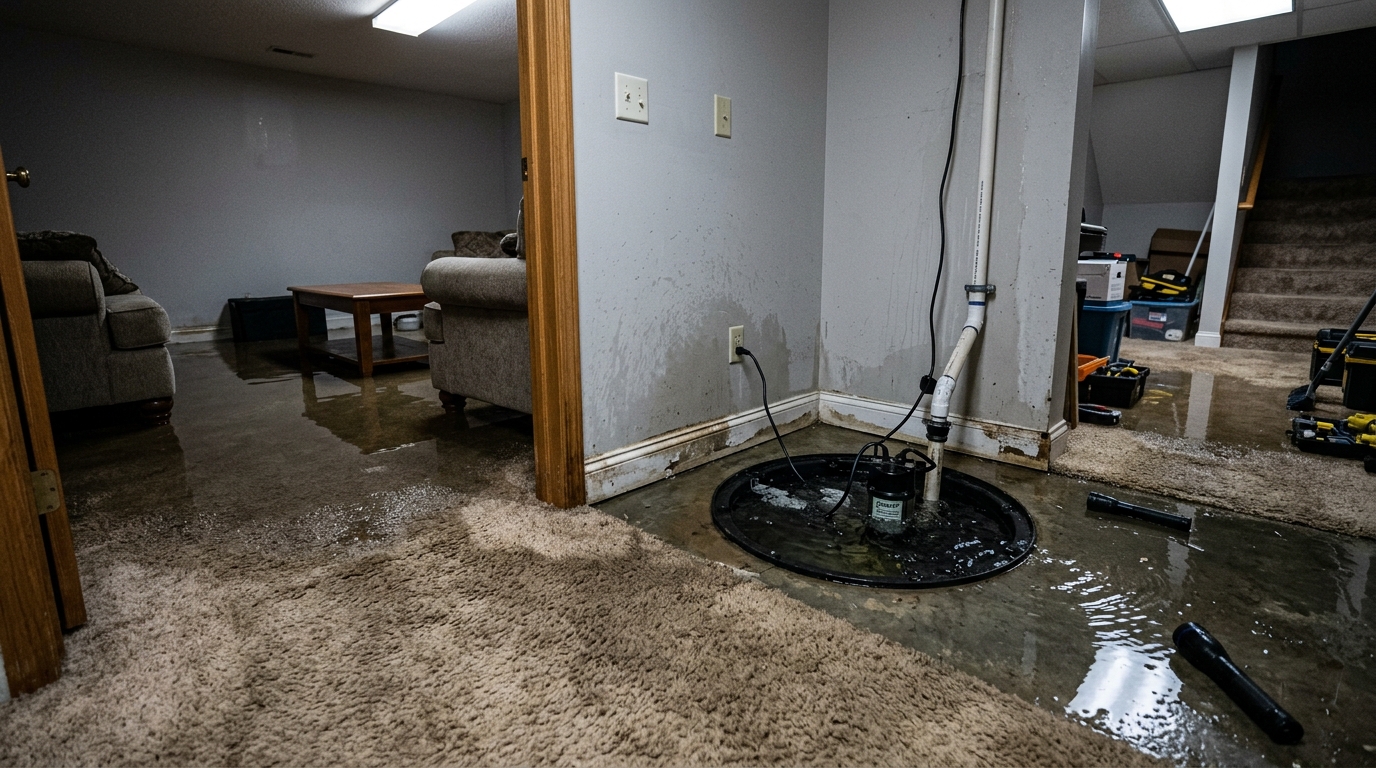
Heavy seasonal precipitation across Beaver Dam creates intense groundwater hydrostatic pressure against foundation masonry. When primary sump pump float switches fail or stormwater drainage lines back up, standing water wicks into finished basement drywall within 24 hours, requiring immediate industrial extraction and structural drying.
Inundation along municipal storm lines frequently overwhelms residential check valves in Beaver Dam basements.
Saturated basement carpeting and porous baseboard framing absorb contaminated water rapidly, releasing airborne mycotoxins into upper living floors.
Foundation walls constructed with Full concrete block basements, Milwaukee historic cream city brick walk-ups, and lakefront cottages suffer lateral moisture weeping when surrounding Red glacial till clay, sandy outwash drift, and prairie organic silt becomes waterlogged.
Certified crews deploy submersible extraction pumps, execute precision 12-inch drywall flood cuts, and treat studs with EPA-registered antimicrobials.
Industrial low-grain refrigerant dehumidifiers lower Wood Moisture Equivalent below 14.0% within 24 to 72 hours, satisfying Wisconsin Statutes Chapter 704 § 704.07 (Landlord Duty to Repair and Maintain Premises).
4 Standardized Inspection & Testing Protocols in Beaver Dam
Certified water extraction and structural drying procedures deployed across flood-damaged Beaver Dam basements follow strict ANSI/IICRC S520 protocols. Calibrated psychrometric instruments monitor atmospheric moisture reduction and identify concealed sub-floor saturation behind finished walls.
- FLIR Thermal Infrared Moisture Mapping: High-resolution infrared cameras detect hidden perimeter water tracks behind baseboards and beneath floating floor assemblies.
- Sub-Slab Hydrostatic Extraction: Commercial truck-mounted extractors remove standing floodwater before capillary pressure damages foundation masonry.
- Precision Containment & Flood Cuts: Technicians remove damaged drywall 12 inches above visible water lines under negative air pressure.
- Post-Remediation Verification Clearance: Independent laboratory air sampling certifies zero airborne fungal counts before reconstruction begins.
3 Regional Environmental Emergency Coverage Zones in Wisconsin
Our emergency response fleet coordinates 24/7 moisture extraction, negative-air containment, and ANSI/IICRC S520 remediation across all municipal sectors in Wisconsin. Certified technicians deploy within 15 to 30 minutes, maintaining synchronized radio dispatch between central operations and regional rapid response stations.
During severe plumbing line breaks or storm inundation, field crews coordinate certified Fort Atkinson mold testing protocols. Similarly, properties facing foundation moisture rely on our Two Rivers thermal moisture detection specialists.
Because airborne fungal spores spread across ventilation plenums, our inspectors partner with West Allis environmental hygienists to verify containment. We also execute timber decontamination backed by our Whitewater mitigation crews and Appleton inspectors.
Whether extracting Category 3 blackwater or sealing crawlspaces, our Bellevue remediation network provides immediate help. This protection is reinforced through our Deforest field stations and the Franklin emergency response team.
Frequently Asked Environmental Questions in Beaver Dam
Why do basement sump pumps fail during heavy rains in Beaver Dam, WI?
Sump pumps in Beaver Dam fail primarily due to intense storm power outages, stuck mechanical float switches, or frozen discharge lines. When pumps lose power during heavy downpours, groundwater fills collection basins rapidly and overflows onto finished basement floors.
Installing a dual-battery backup sump pump system prevents catastrophic basement flooding when municipal electrical grids fail during severe weather events.
How long does professional structural drying take for a flooded Beaver Dam basement?
Professional structural drying in Beaver Dam requires exactly 24 to 72 hours under continuous commercial LGR dehumidification and directional air movers. Certified technicians monitor moisture levels daily until framing timbers drop strictly below 14.0% Wood Moisture Equivalent.
Daily psychrometric logs record ambient temperature, relative humidity, and grains per pound to verify that concrete and wall cavities are stabilized.
Does homeowners insurance cover basement sump pump backups in Wisconsin?
Homeowners insurance in Wisconsin covers sump pump water damage when policyholders carry a specific Water Backup of Sewer or Drain endorsement (HO-0495). Standard property policies exclude groundwater seepage and pump overflow unless this optional rider is active.
Our claims specialists coordinate directly with insurance carriers under Wisconsin Statutes Chapter 704 § 704.07 (Landlord Duty to Repair and Maintain Premises), providing itemized Xactimate estimates and moisture documentation for swift claim approval.
We dispatch certified environmental specialists across all Wisconsin counties. View our Main Wisconsin State Directory Hub or return to the 50-State Hub Directory.
Read our certified Sump pump failure and HO-0495 water backup rider insurance claims guide.
Explore the solved Basement floor drain reverse surge and structural sanitization case study.