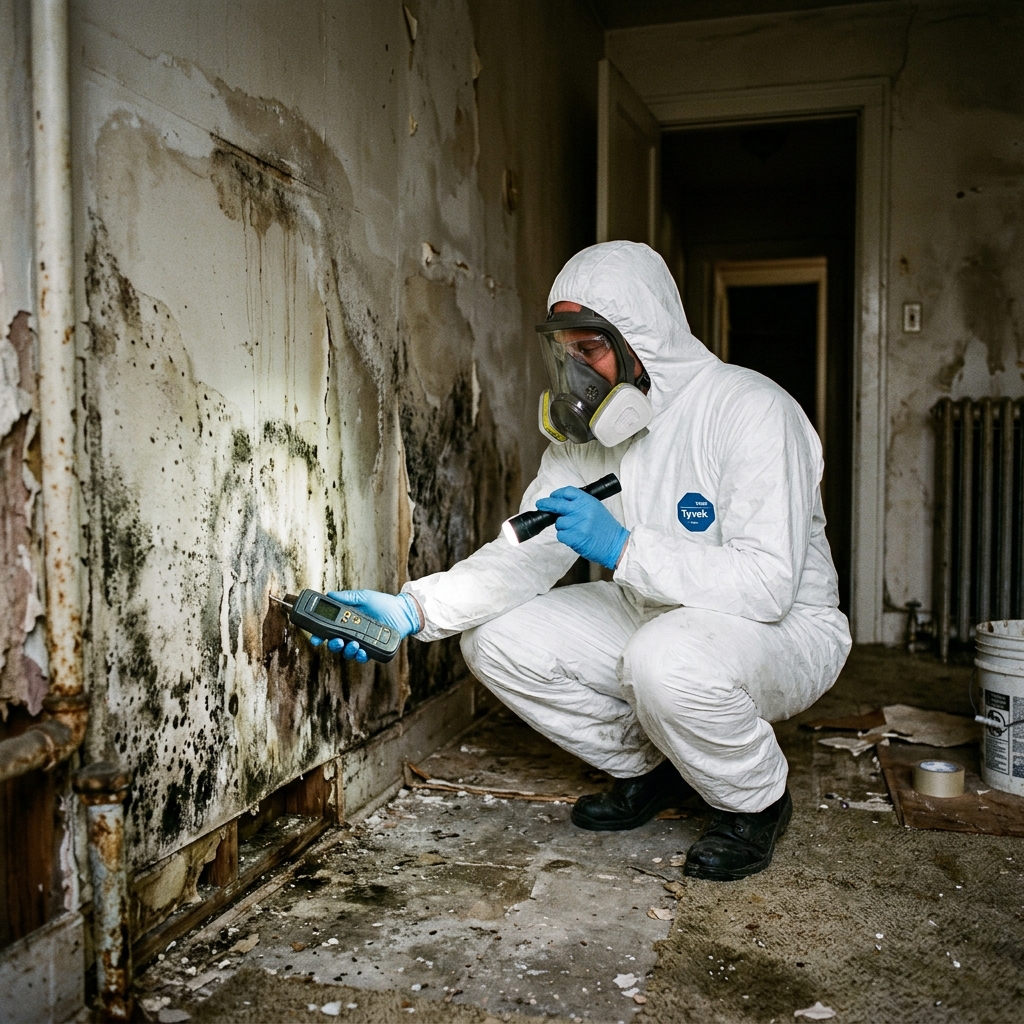
1. Why Long-Vacant Properties Cultivate Severe Biological Infestations
Bank-owned properties sitting without electrical power or active HVAC dehumidification experience rapid indoor relative humidity escalation exceeding 85.0%. Stagnant summer heat turns sealed residential interiors into biological incubators where cellulolytic fungi (including Stachybotrys chartarum and Chaetomium globosum) digest drywall paper, carpet backing.
Bank-owned properties sitting without electrical power or active HVAC dehumidification experience rapid indoor relative humidity escalation exceeding 85.0%.
Stagnant summer heat turns sealed residential interiors into biological incubators where cellulolytic fungi (including Stachybotrys chartarum and Chaetomium globosum) digest drywall paper, carpet backing, and baseboard trim undisturbed for years.
Plumbing line winterization failures also trigger massive structural flooding when municipal water utilities re-pressurize supply lines for buyer walkthroughs.
Water running continuously through ruptured copper pipes saturates subfloor joists and wall assemblies, amplifying fungal spore concentrations past 100,000 spores per cubic meter within 48 to 72 hours.
2. Full-Structure Tear-Out and Demolition Protocols
Chronic fungal contamination across abandoned foreclosures requires systematic physical removal of all porous cellulose building materials. Certified restoration crews establish EPA Level 2 containment chambers with sealed 6-mil flame-retardant poly barriers, stripping contaminated drywall 24.0 inches above the highest visible moisture line.
Technicians remove all carpet textiles in sealed bio-hazard waste bags to prevent spore dissemination into clean zones, discard water-damaged fiberglass batt and blown-in cellulose insulation from affected exterior walls,
propel solid carbon dioxide pellets (-109.3°F) across structural studs at 300 PSI to strip fungal roots without producing toxic chemical run-off, and run commercial HEPA 500 air scrubbers continuously at -5 Pascals pressure to capture aerosolized mycotoxins.
3. Whole-Home HVAC Sterilization and Air Duct Purging
HVAC networks in abandoned residential homes accumulate millions of settled spores that circulate into newly remodeled rooms upon furnace or air conditioning startup. Remediation specialists adhere to NADCA ACR standards, connecting 5,000 CFM negative-pressure vacuum units to trunk lines while deploying pneumatic.
HVAC networks in abandoned residential homes accumulate millions of settled spores that circulate into newly remodeled rooms upon furnace or air conditioning startup.
Remediation specialists adhere to NADCA ACR standards, connecting 5,000 CFM negative-pressure vacuum units to trunk lines while deploying pneumatic air whips to dislodge fungal debris from duct walls.
Technicians clean aluminum evaporator coils using EPA-registered antimicrobial foams, sanitize blower wheel assemblies, and apply botanical fungicidal coatings throughout unlined metal supply trunks before installing new MERV-13 air filtration media.
4. Structural Framing Restoration and Cryogenic Blasting
Structural framing timbers in abandoned homes suffer deep fungal penetration that cannot be eradicated with surface chemical spraying. Certified restoration crews deploy cryogenic dry ice blasting systems that propel solid CO2 pellets at 300 PSI across contaminated floor joists, wall studs, and roof rafters.
The extreme thermal shock at -109.3°F freezes and micro-fractures fungal mycelia instantaneously, causing the dry ice to sublimate directly into carbon dioxide gas without creating abrasive residue. Technicians apply clear EPA-registered botanical fungicidal sealants to bare wood framing, establishing permanent resistance against future moisture spikes.
5. Accurate Budgeting and Price Negotiations for Real Estate Investors
Experienced real estate investors allocate $5,000 to $15,000 for certified whole-home environmental remediation before finalizing purchase bids with bank asset managers. Partnering with licensed contractors who supply itemized Xactimate scopes allows rehabbers to negotiate substantial purchase price discounts from institutional sellers.
Securing AIHA-accredited Post-Remediation Verification (PRV) certificates ensures newly rehabilitated properties qualify for conventional, FHA, and VA retail mortgage financing upon final resale.
6. Maximizing ROI on Distressed Property Resales
Real estate flippers maximize return on investment by providing prospective retail buyers with documented proof of professional environmental restoration. Presenting third-party laboratory air clearance certificates proves the property was completely decontaminated under ANSI/IICRC S520 engineering standards. under certified ANSI/IICRC S520 environmental engineering.
Retail buyers pay full market value for professionally certified homes, allowing investors to exit projects rapidly with maximum profitability while protecting future buyers from hidden respiratory health hazards.
7. Managing Bioaerosol Cross-Contamination During Large-Scale Demolition
Demolishing extensive fungal colonies across abandoned bank-owned properties aerosolizes millions of dormant fungal spores and mycotoxins into ambient indoor air. Certified restoration crews establish multi-stage decontamination airlocks and exhaust negative-air scrubbers directly through exterior windows to maintain continuous -5 Pascals pressure differentials.
Technicians mist contaminated drywall surfaces with botanical surfactant solutions prior to cutting, reducing airborne spore generation by 95.0%. Contaminated building materials are bagged immediately inside 6-mil polyethylene disposal sacks and hauled off-site under licensed hazardous waste disposal manifests to protect neighboring residential properties.
8. Frequently Asked Questions About Buying Distressed Moldy Properties
Can you finance a foreclosed home with active black mold? Conventional, FHA, and VA lenders reject standard financing on properties with active mold, requiring buyers to utilize FHA 203(k) rehabilitation loans or secure upfront cash financing.
How long does whole-home mold remediation take on an REO property? Comprehensive whole-home decontamination (including structural dry ice blasting, HVAC purging, and PRV laboratory clearance) typically requires 5 to 7 business days to complete.
9. Structural Drying Protocols for Long-Vacant Foundations
Restoring abandoned residential basements requires continuous mechanical moisture extraction to purge deep groundwater saturation from foundation concrete. Certified technicians install commercial low-grain refrigerant (LGR) dehumidifiers capable of removing 130 to 180 pints of moisture daily, maintaining target relative humidity levels below 45.0%.
Centrifugal air movers circulate dry air across exposed floor framing at 3,000 feet per minute, accelerating evaporative drying without damaging historic timber assemblies.
Daily moisture tracking logs record grain depression and wood moisture equivalent (WME) readings until structural timber stabilizes below 13.0% WME, establishing ideal conditions for final cosmetic remodeling.
Authored by Antonio
Lead Environmental Health & IICRC Certified Remediation Specialist • Technical Standards Division • Emergency Mold Inspection Network
Related Real Estate & Inspection Guides
Real Estate Guide Pre-Listing Mold Inspections: How Sellers Avoid 5-Figure Price Drops Read Article → Real Estate Guide Failed Home Inspection Due to Attic Mold: How to Save Your Closing in 48 Hours Read Article → Real Estate Guide Selling a House.