1. The Financial Risk of Buyer-Discovered Mold During Escrow
Home buyers who discover fungal colonies during the standard 10-day inspection contingency period demand repair credits 2 to 3 times higher than actual remediation costs. Panicked buyers routinely request $15,000 to $30,000 price reductions or cancel purchase agreements entirely when general property.
Home buyers who discover fungal colonies during the standard 10-day inspection contingency period demand repair credits 2 to 3 times higher than actual remediation costs.
Panicked buyers routinely request $15,000 to $30,000 price reductions or cancel purchase agreements entirely when general property inspectors document musty odors or damp spots on structural framing (such as basement sill plates, crawl space joists, and attic roof sheathing).
Sellers lose critical negotiating utilize whenever buyers control the environmental remediation timeline during active escrow.
Conducting a pre-listing mold assessment allows homeowners to complete controlled physical remediation at competitive market rates before prospective buyers tour the property, protecting net equity proceeds and preventing stressful closing delays.
2. High-Risk Moisture Zones Across Residential Properties
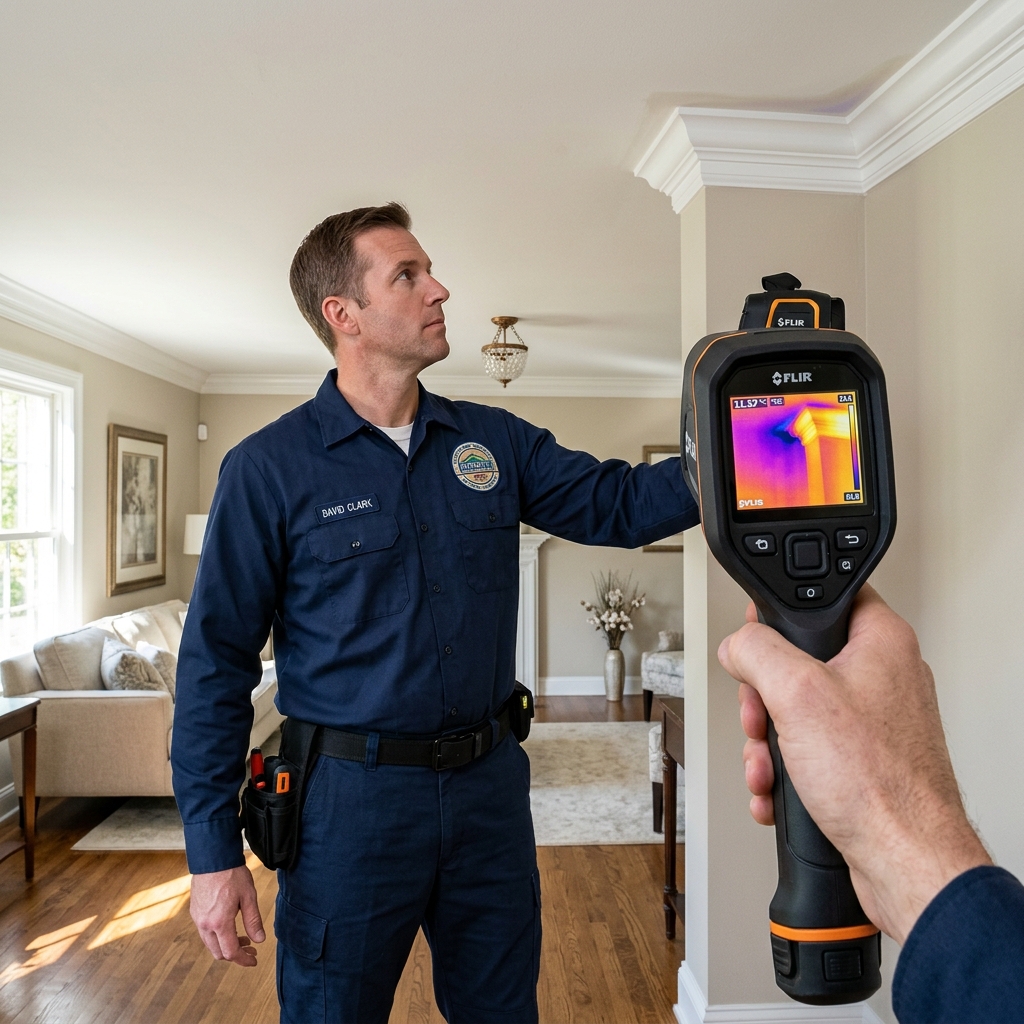
Certified environmental specialists inspect primary moisture intrusion vectors throughout residential properties during pre-listing diagnostics. Technicians utilize non-destructive FLIR infrared cameras and calibrated pinless moisture meters to detect subsurface dampness within building assemblies before fungal amplification becomes visible to the naked eye.
Specialists inspect attic roof sheathing around chimney flashings and blocked soffit vents where condensation collects, scan subfloor plywood beneath custom walk-in showers and whirlpool tubs for chronic plumbing weeping, examine HVAC air handlers and evaporator coils for microbial VOC accumulation,
and measure soil moisture evaporation and wood moisture equivalent (WME) levels on crawl space floor joists.
3. Upfront Remediation Pricing vs. Emergency Buyer Credits
Executing controlled environmental remediation before listing a home costs 50.0% to 70.0% less than funding emergency buyer credits during escrow. When sellers remediate moisture proactively, they obtain multiple competitive bids from licensed IICRC-certified firms, scheduling work during regular business hours without emergency dispatch surcharges.
Conversely, when buyers discover mold during escrow inspections, their contractors submit inflated worst-case estimates that include substantial contingency margins. Upfront restoration transforms an unpredictable real estate liability into a fixed, manageable home preparation expense.
4. Building Buyer Confidence with Certified Clearance Documents
Real estate listing agents utilize clean Post-Remediation Verification (PRV) reports as powerful marketing assets that accelerate buyer offers. Presenting an AIHA-accredited laboratory certificate verifying Condition 1 normal fungal ecology reassures cautious mortgage underwriters and property appraisers from the first day of listing.
Properties with documented environmental clearance sell 30.0% faster than comparable neighborhood listings carrying unverified moisture histories. Homeowners who resolve environmental anomalies proactively eliminate buyer re-negotiation tactics, ensuring transactions proceed smoothly toward final settlement without escrow holdbacks or price reductions.
5. Marketing Environmentally Certified Homes on the MLS
Listing agents highlight certified environmental clearance directly in the public remarks section of Multiple Listing Service (MLS) property profiles. Featuring terms such as 'Certified Mold-Free Structure' and 'Passing Post-Remediation Verification' attracts health-conscious buyers and families with respiratory sensitivities. under certified ANSI/IICRC S520.
Providing the complete laboratory clearance report in the MLS document repository enables buyer agents to confirm property condition prior to writing offers. This transparency builds trust and encourages full-price purchase offers from qualified buyers seeking move-in-ready residential homes.
6. Securing Full MLS Market Valuations and Faster Closings
Disclosing a passing environmental clearance report upfront generates competitive bidding environments among buyers who value move-in-ready structural safety. When prospective buyers see third-party laboratory documentation confirming zero toxic mold species and structural wood moisture below 14.0% WME, they submit clean offers without.
Disclosing a passing environmental clearance report upfront generates competitive bidding environments among buyers who value move-in-ready structural safety. When prospective buyers see third-party laboratory documentation confirming zero toxic mold species and structural wood moisture below 14.0% WME, they submit clean offers without demanding repair contingencies.
Eliminating inspection disputes accelerates loan processing times by 10 to 14 days, guaranteeing sellers receive their full closing proceeds on schedule without unexpected escrow holdbacks or contract cancellations.
7. The Strategic Negotiation Advantage for Real Estate Sellers
Executing pre-listing environmental diagnostics transforms potential deal-breaking inspection liabilities into powerful marketing assets that protect seller equity. When property owners provide certified laboratory documentation proving Condition 1 normal fungal ecology upfront, prospective buyers lose the utilize required to demand inflated repair concessions.
Real estate listing agents utilize passing Post-Remediation Verification certificates to justify full asking prices, assuring buyer mortgage lenders that the residential property satisfies all structural habitability requirements without escrow complications.
8. Frequently Asked Questions About Pre-Listing Mold Inspections
How much does a professional pre-listing mold inspection cost? Standard comprehensive environmental diagnostics (including FLIR thermal moisture mapping and laboratory spore trap testing) typically cost $350 to $650.
Do sellers have to disclose past mold if it was professionally remediated? Sellers disclose past moisture events alongside the certified Certificate of Completion and passing PRV report, which proves the issue was permanently resolved.
9. Thermal Moisture Mapping and Pinless Meter Calibration
Certified environmental inspectors utilize calibrated dual-depth radio frequency moisture meters alongside high-resolution FLIR infrared thermal cameras during pre-listing diagnostics. Thermal imaging identifies subtle evaporative cooling anomalies across finished walls and ceiling drywall, guiding targeted physical pin probe testing without damaging wall paint.
Documenting normal moisture readings across all interior building assemblies produces a comprehensive diagnostic profile that gives prospective buyers complete confidence during escrow walkthroughs.
Authored by Antonio
Lead Environmental Health & IICRC Certified Remediation Specialist • Technical Standards Division • Emergency Mold Inspection Network
Related Real Estate & Inspection Guides
Real Estate Guide Failed Home Inspection Due to Attic Mold: How to Save Your Closing in 48 Hours Read Article → Real Estate Guide Selling a House 'As-Is' with Toxic Mold: State Disclosure Laws & Fraud Read Article → Real Estate Guide.