Geotechnical Swell Mechanics of Front Range Bentonite Clay
Bentonite clay contains volcanic ash minerals that expand up to 15 times their dry volume when exposed to water. In Front Range neighborhoods with high clay concentrations, fluctuating moisture seasons generate extreme hydrostatic and lateral soil forces. Expanding clay seals natural soil.
Bentonite clay contains volcanic ash minerals that expand up to 15 times their dry volume when exposed to water. In Front Range neighborhoods with high clay concentrations, fluctuating moisture seasons generate extreme hydrostatic and lateral soil forces.
Expanding clay seals natural soil drainage paths, trapping a perched water table directly against subterranean basement walls. As water seeks path of least resistance, it penetrates floor-to-wall joints and tie-rod penetrations in concrete foundation walls.
Floating Wall Framing & Sub-Floor Moisture Wicking Dynamics
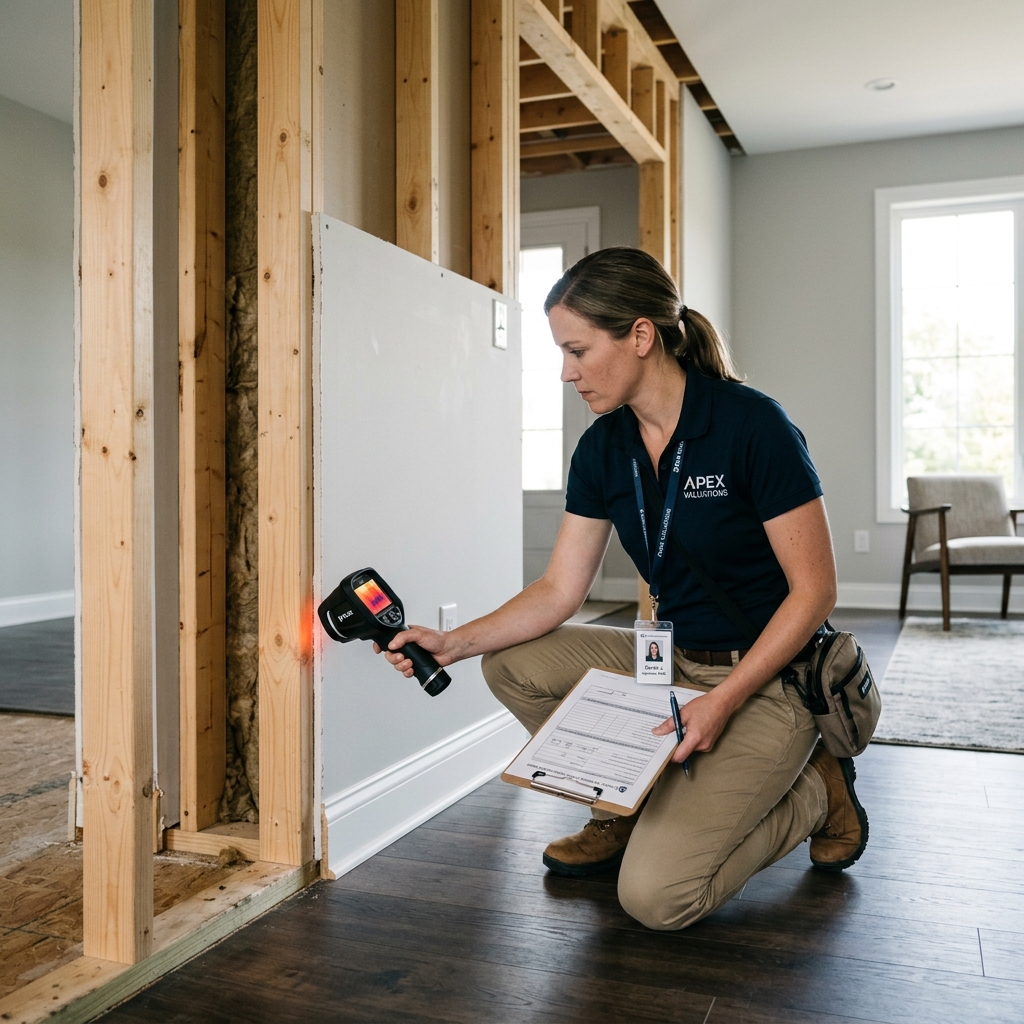
Colorado building codes mandate floating interior partition walls with a 1.5-inch to 3.0-inch void space at the bottom to accommodate concrete slab heave. However, when finished basements flood, water pools beneath baseplates and wicks upward into floating drywall assemblies. Because Denver homes.
Colorado building codes mandate floating interior partition walls with a 1.5-inch to 3.0-inch void space at the bottom to accommodate concrete slab heave. However, when finished basements flood, water pools beneath baseplates and wicks upward into floating drywall assemblies.
Because Denver homes maintain indoor winter heating, saturated building materials enter the optimal biological growth range, cultivating heavy Cladosporium and Stachybotrys colonies behind pristine baseboards.
Fannie Mae 1004D Appraisal Reversal Protocols
When mortgage appraisers flag basement water intrusion and microbial growth under Fannie Mae Selling Guide Section B4-1.3-06, loan funding is halted under a "Subject to Repair" condition. Reversing appraisal value deductions requires: (1) executing ANSI/IICRC S520 negative-air containment (-5 Pa), (2) extracting.
When mortgage appraisers flag basement water intrusion and microbial growth under Fannie Mae Selling Guide Section B4-1.3-06, loan funding is halted under a "Subject to Repair" condition.
Reversing appraisal value deductions requires: (1) executing ANSI/IICRC S520 negative-air containment (-5 Pa), (2) extracting water and removing compromised drywall, (3) upgrading sump systems to dual commercial pumps with AGM battery backups, and (4) delivering an independent PRV laboratory air clearance report to trigger an expedited Form 1004D reinspection.
Crystalline Waterproofing & Low-Grain Dehumidification Standards
Permanent remediation of bentonite-induced basement seepage requires applying hydrophilic crystalline waterproofing barrier sealants directly onto bare concrete foundation walls. Crystalline compounds penetrate deep into concrete pores, reacting with free moisture to form insoluble silicate crystals that block hydrostatic pressure. Technicians operate commercial.
Permanent remediation of bentonite-induced basement seepage requires applying hydrophilic crystalline waterproofing barrier sealants directly onto bare concrete foundation walls. Crystalline compounds penetrate deep into concrete pores, reacting with free moisture to form insoluble silicate crystals that block hydrostatic pressure.
Technicians operate commercial Low Grain Refrigerant (LGR) dehumidifiers until concrete slab internal RH tests below 75% under ASTM F2170 test standards.