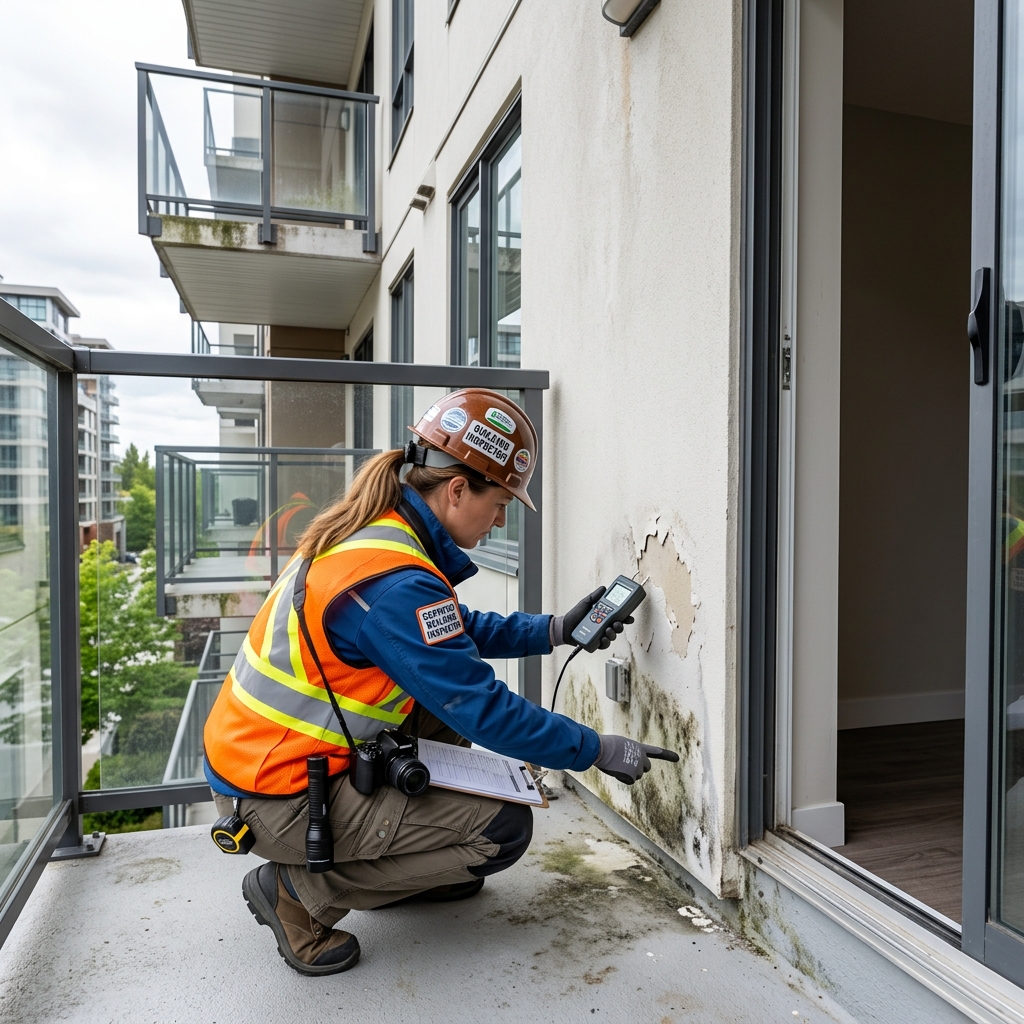
1. Common Elements vs. Unit Owner Boundaries (CC&Rs)
Condominium Covenants, Conditions, and Restrictions (CC&Rs) define exact physical boundaries dividing individual homeowner property from HOA common building elements. The HOA master insurance policy covers all structural remediation expenses whenever moisture intrusion originates from shared building infrastructure (such as exterior roof flashings.
Condominium Covenants, Conditions, and Restrictions (CC&Rs) define exact physical boundaries dividing individual homeowner property from HOA common building elements.
The HOA master insurance policy covers all structural remediation expenses whenever moisture intrusion originates from shared building infrastructure (such as exterior roof flashings, perimeter brick facades, rainwater drainage stacks, and common plumbing risers).
Individual unit owners remain financially responsible for interior drywall and personal property damage only when fungal amplification results from internal fixture failures (including overflowing bathtubs, disconnected washing machine hoses, or unventilated shower enclosures).
Establishing the precise origin point through non-destructive diagnostic tools determines which insurance policy pays for remediation costs.
2. Balcony Flashing Leaks and Exterior Ledger Board Decay
Exterior condominium balconies represent high-risk structural moisture vectors where failed waterproof membranes allow rainwater to penetrate living room subfloors and ceiling trusses below. Because balcony cantilever beams and exterior wall waterproofing constitute common building elements under standard CC&Rs, the HOA must fund.
Exterior condominium balconies represent high-risk structural moisture vectors where failed waterproof membranes allow rainwater to penetrate living room subfloors and ceiling trusses below.
Because balcony cantilever beams and exterior wall waterproofing constitute common building elements under standard CC&Rs, the HOA must fund the removal of contaminated siding, saturated fiberglass insulation, and structural framing dry ice blasting.
Technicians deploy thermal infrared mapping to detect concealed water paths traveling horizontally along shared concrete slabs into private unit drywall, erect cross-unit containment airlocks with HEPA 500 air filtration operating at -5 Pascals pressure to protect neighboring units,
and generate itemized Xactimate scopes to facilitate subrogation between individual HO-6 policies and the master carrier.
3. Shared Demising Wall Leaks and Cross-Unit Contamination Protocols
Plumbing pipe ruptures inside shared demising walls between adjacent condominium units cause multi-family biological contamination requiring synchronized multi-unit containment. Certified remediation contractors erect sealed 6-mil poly containment chambers inside both units, running negative-air scrubbers to prevent cross-contamination across shared electrical and plumbing chases.
Technicians cut out compromised drywall 24.0 inches above water marks on both sides of the demising wall, treating common structural studs with EPA-registered botanical antimicrobials before installing acoustic insulation.
4. Resolving HOA Board Disputes Through Third-Party Laboratory Testing
Condo owners overcome resistant HOA property managers by commissioning an independent Indoor Environmental Consultant (CIEC) to document the scientific chain of causation. Independent consultants collect calibrated bioaerosol air samples at 15.0 liters per minute and conduct optical cavity borescopes to photograph concealed.
Condo owners overcome resistant HOA property managers by commissioning an independent Indoor Environmental Consultant (CIEC) to document the scientific chain of causation.
Independent consultants collect calibrated bioaerosol air samples at 15.0 liters per minute and conduct optical cavity borescopes to photograph concealed fungal growth behind shared demising walls.
Presenting a third-party laboratory clearance report alongside date-stamped thermal moisture scans creates incontrovertible evidence of common element water intrusion. HOA boards and insurance adjusters approve immediate emergency remediation funding once professional documentation proves biological contamination threatens building structural integrity and multi-family occupant health.
5. Legal Remedies for Unresponsive Property Management Companies
Condominium owners faced with unresponsive HOA boards can issue formal legal notices citing breach of fiduciary duty and violation of the implied warranty of habitability. State condominium statutes grant unit owners the right to execute emergency repairs and demand full reimbursement when.
Condominium owners faced with unresponsive HOA boards can issue formal legal notices citing breach of fiduciary duty and violation of the implied warranty of habitability.
State condominium statutes grant unit owners the right to execute emergency repairs and demand full reimbursement when boards fail to address structural water leaks within statutory notice periods.
Engaging an environmental attorney to deliver certified laboratory clearance reports alongside formal demand letters compels property management firms to initiate immediate containment and remediation under master insurance coverage.
6. Navigating Insurance Subrogation and Master Policy Deductibles
Insurance subrogation allows unit owners to recover out-of-pocket expenses when the HOA master insurance policy covers common element water damage. The individual unit owner's HO-6 insurer pays for immediate interior repairs, subsequently filing a formal subrogation claim against the HOA's commercial property.
Insurance subrogation allows unit owners to recover out-of-pocket expenses when the HOA master insurance policy covers common element water damage.
The individual unit owner's HO-6 insurer pays for immediate interior repairs, subsequently filing a formal subrogation claim against the HOA's commercial property policy to recover all disbursed funds alongside the homeowner's personal deductible.
Maintaining detailed photographic logs and certified laboratory test reports ensures full financial recovery without personal expense, protecting homeowner equity and multi-unit property values.
7. Multi-Unit Containment and HVAC Isolation Protocols
Remediating fungal contamination inside multi-family condominium buildings requires rigorous containment engineering to prevent airborne spores from circulating through shared HVAC risers. Certified technicians seal all common ventilation registers with magnetic covers and 6-mil flame-retardant poly barriers before initiating physical demolition.
Restoration crews deploy commercial HEPA air scrubbers venting directly to exterior balcony windows, maintaining continuous negative air pressure across the work zone to protect adjoining unit residents from cross-unit bioaerosol migration.
8. Frequently Asked Questions About Condo and HOA Mold Disputes
Can an HOA fine a unit owner for reporting mold in a shared wall? Condominium statutes protect unit owners against retaliatory fines when reporting common element water intrusion affecting building habitability.
Who pays for temporary relocation during extensive condo mold remediation? The responsible party's insurance carrier (the HOA commercial policy for common elements or the owner's HO-6 policy for private fixtures) covers Loss of Use lodging expenses.
9. Documenting Moisture Infiltration for Association Reserve Studies
Condominium boards utilize professional environmental assessment reports to allocate capital reserves for building envelope maintenance and facade waterproofing. When independent environmental consultants document systemic flashing failures across multiple unit balconies, association engineers update annual reserve studies to schedule comprehensive exterior renovations.
Proactive capital allocation prevents repetitive water damage claims, protecting condominium property values and eliminating the need for emergency special assessments across the community.
Authored by Antonio
Lead Environmental Health & IICRC Certified Remediation Specialist • Technical Standards Division • Emergency Mold Inspection Network
Related Real Estate & Inspection Guides
Real Estate Guide Selling a House 'As-Is' with Toxic Mold: State Disclosure Laws & Fraud Read Article → Real Estate Guide Failed Home Inspection Due to Attic Mold: How to Save Your Closing in 48 Hours Read Article → Real Estate Guide.