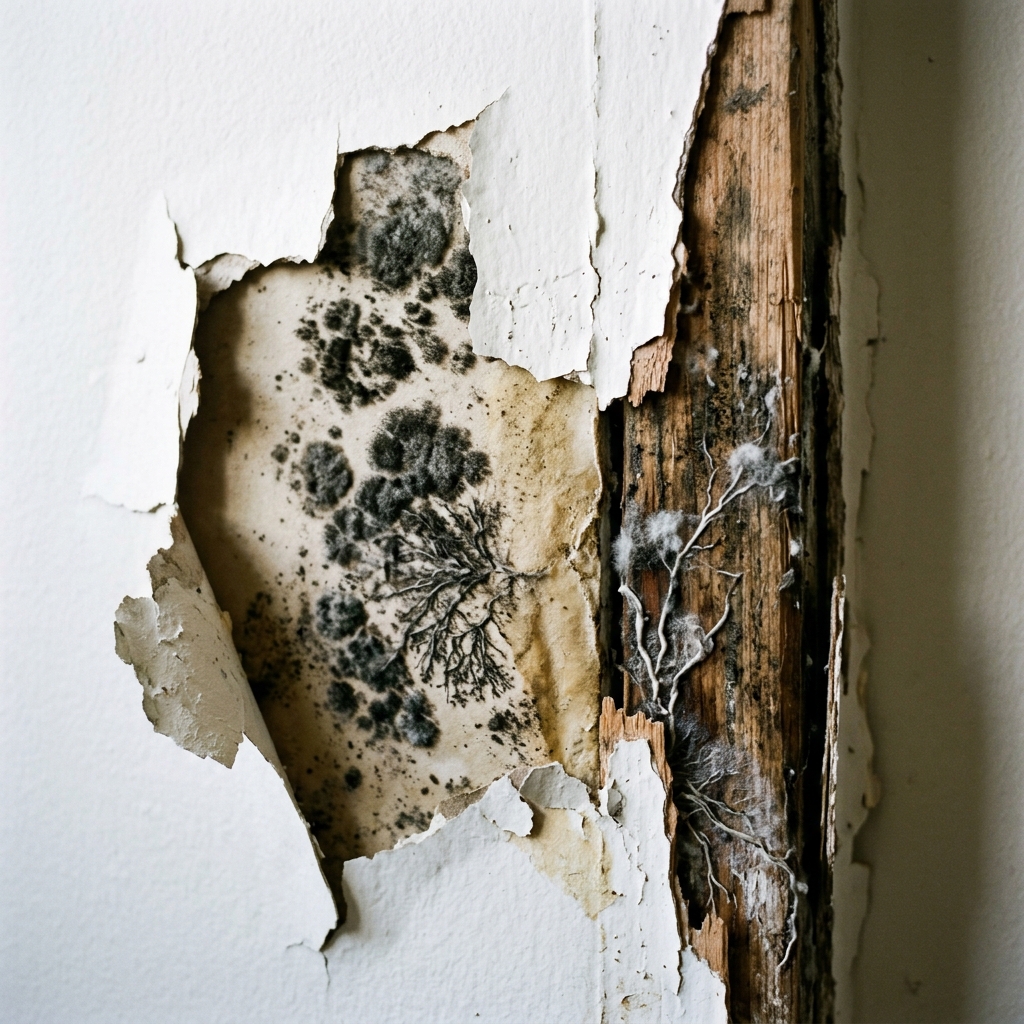
1. The Biological Failure of Surface Primers on Porous Timber
Standard oil-based and latex primers form a thin cosmetic membrane across surface materials without killing underlying mycelial root structures (hyphae) embedded 3.0 to 5.0 millimeters deep inside porous building materials (such as Douglas fir wall studs, subfloor plywood, and drywall gypsum paper).
Standard oil-based and latex primers form a thin cosmetic membrane across surface materials without killing underlying mycelial root structures (hyphae) embedded 3.0 to 5.0 millimeters deep inside porous building materials (such as Douglas fir wall studs, subfloor plywood, and drywall gypsum paper).
Fungal roots absorb ambient atmospheric humidity through porous timber grain, continuing cellular respiration beneath dried paint films.
Microscopic hyphae easily penetrate cured paint layers within 30 to 90 days of property closing, producing flaking paint and dark fungal bloom stains across freshly remodeled rooms.
Home buyers discover the concealed contamination quickly, filing deceptive trade practices lawsuits against real estate flippers for intentional concealment.
2. How Certified Home Inspectors Catch Cosmetic Paint Cover-Ups
Certified property inspectors identify cosmetic mold cover-ups instantaneously using high-frequency RF moisture meters, FLIR thermal imaging cameras, and high-definition optical borescopes. Pinless moisture meters transmit electromagnetic waves 0.75 inches through finished paint coatings, detecting elevated moisture pockets behind freshly painted drywall sheets.
Inspectors use thermal infrared anomaly mapping to pinpoint evaporative cooling patterns where dampness remains trapped beneath thick primer coats, drill 0.25-inch exploratory holes to insert high-definition borescopes photographing active fungal colonization on the unpainted backside of drywall,
and measure volatile metabolic byproducts (such as 1-octen-3-ol and geosmin) that off-gas through latex paint films.
3. Microbial Volatile Organic Compounds (mVOCs) and Indoor Toxicity
Fungi trapped beneath paint layers enter metabolic stress modes, releasing elevated concentrations of toxic microbial volatile organic compounds (mVOCs) directly into indoor living spaces. Chemical vapors (including 3-octanone, 2-methyl-1-propanol, and geosmin) permeate drywall and latex paint, producing an unmistakable musty odor that.
Fungi trapped beneath paint layers enter metabolic stress modes, releasing elevated concentrations of toxic microbial volatile organic compounds (mVOCs) directly into indoor living spaces.
Chemical vapors (including 3-octanone, 2-methyl-1-propanol, and geosmin) permeate drywall and latex paint, producing an unmistakable musty odor that persists despite continuous air freshener use.
Inhaling concentrated mVOC bioaerosols triggers headaches, eye irritation, nausea, and cognitive fatigue in prospective home buyers touring newly remodeled properties, creating immediate deal cancellations during property walkthroughs.
4. The Certified Alternative: Physical Removal and Cryogenic Stripping
Professional real estate renovators comply with ANSI/IICRC S520 engineering standards by physically removing colonized porous building materials rather than attempting to paint over active fungi. Technicians cut out compromised drywall 24.0 inches beyond the furthest visible mold boundary under negative air pressure.
Professional real estate renovators comply with ANSI/IICRC S520 engineering standards by physically removing colonized porous building materials rather than attempting to paint over active fungi. Technicians cut out compromised drywall 24.0 inches beyond the furthest visible mold boundary under negative air pressure containment (-5 Pascals).
Remediation crews propel cryogenic dry ice pellets at -109.3°F across structural timber framing, freezing and micro-fracturing fungal root systems without producing abrasive residue. Applying EPA-registered botanical fungicidal sealants containing natural thymol active ingredients establishes permanent antimicrobial resistance that passes buyer home inspections with complete confidence.
5. Proper Encapsulation vs. Improper Paint Cover-Ups
Professional mold encapsulation differs fundamentally from applying retail paint primers over untreated fungal growth. Certified encapsulation occurs only after thorough mechanical cleaning, HEPA vacuuming, and complete structural timber drying below 14.0% WME have been verified. under certified ANSI/IICRC S520 environmental engineering standards.
Technicians apply specialized elastomeric fungicidal coatings formulated with EPA-registered active biocides that bond covalently with clean timber fibers. These professional coatings inhibit fungal regrowth permanently, providing a documented barrier that satisfies building inspectors and mortgage appraisers.
6. Long-Term Value Creation for Professional Real Estate Renovators
Real estate investors who execute certified physical remediation protect project profitability and eliminate post-sale legal exposure. Documenting structural decontamination with third-party Post-Remediation Verification (PRV) clearance certificates allows flippers to market properties at premium price points. under certified ANSI/IICRC S520 environmental engineering standards.
Retail buyers pay top dollar for verified healthy homes, enabling renovators to build reputable brands and achieve swift, profitable escrow closings without future litigation risks.
7. Long-Term Health Risks of Concealed Fungal Growth for Homeowners
Concealing toxic mold behind superficial paint films exposes building occupants to chronic low-dose inhalation of cytotoxic mycotoxins and fungal particulates. When moisture vapor passes through porous drywall, dormant fungal hyphae resume active metabolic off-gassing, releasing trichothecenes and beta-glucans into indoor bedroom air.
Occupants living in cosmetically painted water-damaged homes suffer chronic sinusitis, unexplained cognitive fatigue, severe asthma exacerbations, and immune dysfunction, resulting in extensive medical expenses and post-purchase legal claims against property flippers.
8. Frequently Asked Questions About Painting Over Mold
Does Kilz or Zinsser primer kill black mold on drywall? Primers form a surface coating but do not penetrate porous cellulose to eradicate deep fungal root hyphae, allowing mold to regrow within 30 to 90 days.
What is the only permanent solution for structural mold on framing lumber? Physical removal of colonized drywall alongside cryogenic dry ice blasting (-109.3°F) and EPA-registered botanical sealing represents the only certified remediation method.
9. Structural Wood Joist Restoration vs. Framing Replacement
Real estate renovators evaluate structural wood framing to determine whether load-bearing timber requires physical cryogenic decontamination or complete structural replacement. Fungal colonization that has not caused structural wood rot (where wood density remains firm under pick tests) is completely restored using -109.
Real estate renovators evaluate structural wood framing to determine whether load-bearing timber requires physical cryogenic decontamination or complete structural replacement. Fungal colonization that has not caused structural wood rot (where wood density remains firm under pick tests) is completely restored using -109.3°F dry ice blasting.
When chronic water leaks cause cubical brown rot or soft rot that degrades timber load capacity, carpenters sister new Douglas fir dimensional framing alongside existing joists after applying EPA-registered botanical biocides, restoring full structural integrity to the building envelope.
Authored by Antonio
Lead Environmental Health & IICRC Certified Remediation Specialist • Technical Standards Division • Emergency Mold Inspection Network
Related Real Estate & Inspection Guides
Real Estate Guide Buying a Foreclosed or Bank-Owned (REO) Home with 2-Year Old Mold Read Article → Real Estate Guide Selling a House 'As-Is' with Toxic Mold: State Disclosure Laws & Fraud Read Article → Real Estate Guide Failed Home Inspection Due.