Structural Mechanics of Historic Philadelphia Common Brick Party Walls
Historic Philadelphia party walls consist of two to three wythes of soft, low-fired common clay brick bound with historic lime-based mortar. These masonry assemblies are inherently porous and hygroscopic, designed to absorb environmental moisture and dry through natural vapor diffusion.
Historic Philadelphia party walls consist of two to three wythes of soft, low-fired common clay brick bound with historic lime-based mortar. These masonry assemblies are inherently porous and hygroscopic, designed to absorb environmental moisture and dry through natural vapor diffusion.
However, when an adjoining property owner permits continuous roof runoff to saturate the party wall, the brick reaches 100% moisture saturation. Applying impermeable latex paint or retail waterproof sealers traps water inside the brick, causing severe winter freeze-thaw spalling and structural joist pocket decay.
Navigating Philadelphia L&I Property Maintenance Code Citations
When uncooperative adjoining neighbors refuse to fix active roof leaks dumping water into shared walls, affected owners can file an emergency complaint with the Philadelphia Department of Licenses & Inspections (L&I). Under Philadelphia Code Title 4 (Subcode PM, Section PM-304), property owners.
When uncooperative adjoining neighbors refuse to fix active roof leaks dumping water into shared walls, affected owners can file an emergency complaint with the Philadelphia Department of Licenses & Inspections (L&I).
Under Philadelphia Code Title 4 (Subcode PM, Section PM-304), property owners have an affirmative legal duty to maintain exterior roofs, flashings, and rainwater drainage in a watertight condition.
L&I inspectors issue formal Notices of Violation assessing fines of $1,000 per day against delinquent neighbors, creating immediate legal utilize to compel structural repairs.
Breathable Silane-Siloxane & Potassium Silicate Sealing
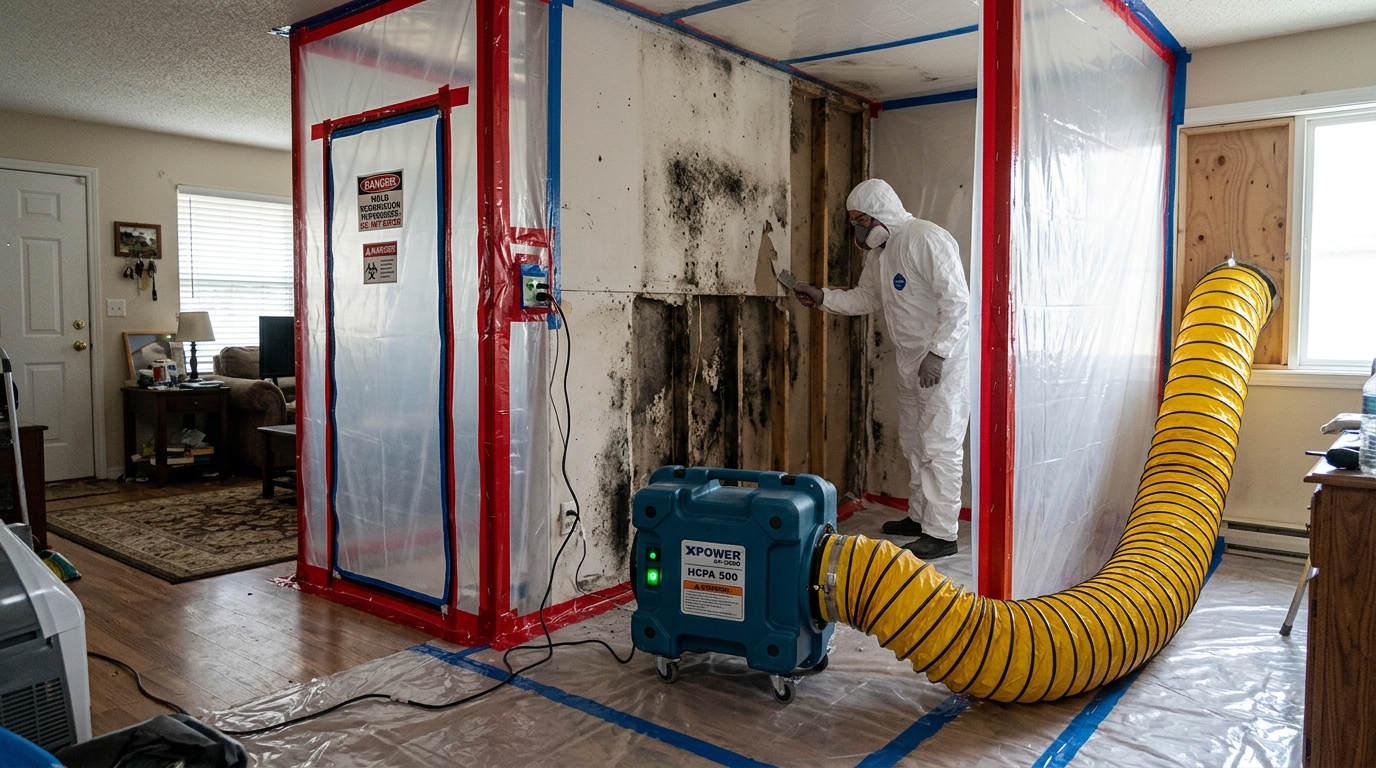
Remediating mold on historic brick requires non-destructive extraction methods that preserve soft lime mortar joints. Certified remediation technicians erect negative-air containment (-5 Pa) and use HEPA-filtered mechanical scraping or low-pressure media blasting to strip fungal mycelia. Technicians then treat the brick surface.
Remediating mold on historic brick requires non-destructive extraction methods that preserve soft lime mortar joints. Certified remediation technicians erect negative-air containment (-5 Pa) and use HEPA-filtered mechanical scraping or low-pressure media blasting to strip fungal mycelia.
Technicians then treat the brick surface with deep-penetrating potassium silicate or silane-siloxane hydrophobic sealers. These crystalline treatments react chemically with free lime in the brick to block liquid water penetration while preserving vapor breathability.
Isolated Framing Air Gap Reconstruction Standards
Reconstructing interior living space walls against a historic party wall requires engineering moisture isolation. Remediators construct independent steel or treated lumber stud walls positioned with a mandatory 1.0-inch continuous air gap away from the historic brick. Technicians install mold-resistant fiberglass-mat gypsum boards.
Reconstructing interior living space walls against a historic party wall requires engineering moisture isolation. Remediators construct independent steel or treated lumber stud walls positioned with a mandatory 1.0-inch continuous air gap away from the historic brick.
Technicians install mold-resistant fiberglass-mat gypsum boards (such as DensArmor Plus) and continuous perimeter ventilation channels, ensuring any future minor masonry vapor diffusion vents harmlessly without contacting organic wall components.